



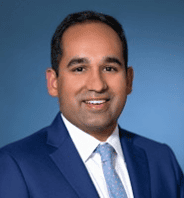
Leading Innovation in Digital Medicine and Remote Care
Summary
Dr. Apurv Soni, Assistant Professor and Director of the Program in Digital Medicine at UMass Chan, is transforming healthcare through mobile technology, predictive analytics, and decentralized clinical trials. Supported early by a TL1 award and later an NIH F30, his work advances remote patient monitoring, digital platforms, and real-world evaluation of innovative tools. He helped build UMass Memorial’s Hospital at Home program and led EMR-based risk-stratification efforts during COVID-19, protecting over 2,500 patients. His cross-disciplinary projects—from sensor-embedded toilet seats to virtual maternal and COPD care—address health disparities and expand access. Dr. Soni’s leadership and mentorship continue to shape the future of equitable, technology-enabled clinical care.
Article
As an Assistant Professor in the Division of Health Systems Science and Director of the Program in Digital Medicine at UMass Chan Medical School, Dr. Apurv Soni stands out as a physician-scientist reshaping the future of healthcare. By harnessing mobile technology, predictive analytics, and implementation science, Dr. Soni’s work aims to improve patient outcomes and reduce disparities, bringing high-quality care beyond the boundaries of traditional clinical settings. As a young investigator, Dr. Soni was supported by a TL1 Trainee award (2016-2017, TL1TR001454) which provided the opportunity to enhance his skills as a translational physician-scientist resulting in an NIH award (F30HD091975) to investigate health disparities among children through clinical practice in underserved regions, community-based research, and evidence-based advocacy.
Dr. Soni’s research has transformed the way care is delivered, especially for patients who benefit most from remote clinical monitoring and intervention. Since joining UMass Chan in 2021, he has been at the forefront of decentralized, siteless clinical trials—leading studies that recruit and follow participants from home using digital consent, telehealth visits, remote sampling, wearable devices, and automated data capture. This learning health systems approach allows for rapid innovation and evaluation of digital technologies in real-world settings.
A foundational aspect of Dr. Soni’s impact is the development and validation of digital and mobile health platforms for both acute and chronic conditions. He played a pivotal role in shaping UMass Memorial Health’s highly praised Hospital at Home program, creating the technical infrastructure and robust analytical frameworks that influence clinical decision-making and policy. During the COVID-19 pandemic, Dr. Soni led the team that used electronic medical record-based analytics for risk stratification and triage, safeguarding over 2,500 patients during critical surges.
His collaborative approach extends across disciplines, with projects like COMMODE-seat (Correlating Outcomes with Mobile Monitoring using Digital sEnsors in a seat), which leverages passive data from novel sensor-embedded toilet seats to identify early changes in patients’ health. Other initiatives include virtual lactation consultation for maternal health and remote patient monitoring plus virtual pulmonary rehabilitation for chronic obstructive pulmonary disease (COPD) through the “Healthy at Home for COPD” program (PMID: 40641609).
Dr. Soni’s commitment to care for all is reflected in his pragmatic clinical trials and community-based research. He has authored studies examining the direct-to-consumer distribution of COVID-19 rapid antigen tests, the efficacy of digital interventions for COPD, and large-scale home-based test-to-treat programs for infectious disease. His mentorship fosters innovation in the next generation, as he supports several TL1 trainees (TL1TR001454) focused on optimizing home-based diagnostics and studying health disparities (PMID: 38911947).
Thanks to Dr. Soni’s visionary leadership and collaborative spirit, digital medicine and remote clinical care at UMass Chan continue to grow, bridging gaps in access and setting new standards for patient-centered, technology-driven healthcare.
Some parts of this article were created with the assistance of OpenAI GPT, utilizing content from publicly available news stories on the internet, including stories produced by UMass Chan Communications.


