



Hub Spotlight: Frontiers Clinical CTSI at the University of Kansas
CCOS is pleased to announce a new series of hub highlights featuring the innovative clinical and translational science coming out of the CTSA Program. We will feature groundbreaking work from each hub in the CTSA program over the coming months, selected at random. Next up on the docket is the Frontiers Clinical and Translational Science Institute (CTSI) at the University of Kansas.
The field of genetic testing has seen significant advancements, but access to these innovations has yet to spread to many parts of the country, particularly for those living in rural areas. Researchers Ana Cohen, Ph.D., FACMG, and Courtney Berrios, M.Sc., Sc.M., CGC, are pioneering efforts to bridge this gap, bringing cutting-edge genetic testing to rural communities.
Individuals with rare genetic disorders frequently face a prolonged and onerous journey to obtain a diagnosis, often averaging as long as five years. This process can be exacerbated by a shortage of genetics specialists and the logistical challenges of accessing care, especially for those in rural areas. Patients in rural areas typically endure long waitlists and multiple visits to urban centers, further delaying diagnoses and subsequent care.
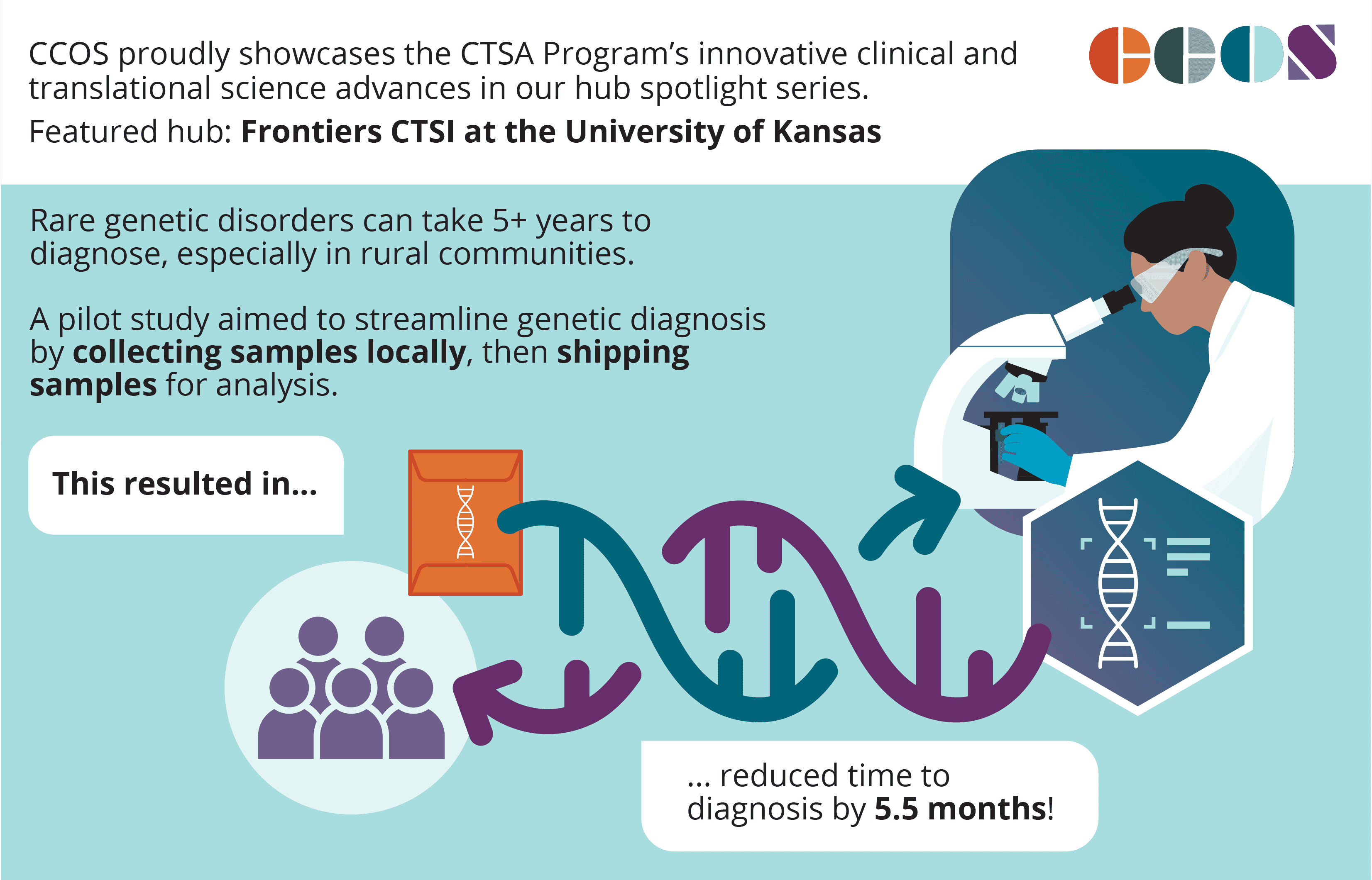
With these challenges in mind Dr. Ana Cohen, Assistant Director of Molecular Genetics at Children’s Mercy Kansas City, sought to address them through a pilot study funded by the Lauren S. Aaronson Pilot Award. Partnering with a primary care clinic in Salina, Kansas (about 170 miles outside of Kansas City, KS), Dr. Cohen's team aimed to streamline the genetic testing process for rural families. The initiative allowed primary care providers and pediatricians to initiate genetic testing locally, with samples sent to Cohen’s team for analysis, ultimately eliminating the need for families to travel long distances for genetic testing.
The study provided promising results, demonstrating a 5.5-month reduction in time to diagnosis compared to traditional methods. Participants achieved the same diagnostic rates as those seen by specialists in person, but much faster, effectively bypassing the waitlist. This success was underpinned by the structural support of the Genomic Answers for Kids (GA4K) program, which facilitated test logistics and counseling. The GA4K program, established in 2019, aims to collect genomic data from 30,000 children and their families, creating a comprehensive database of nearly 100,000 genomes. This initiative aligns with a key mission of the Frontiers CTSI to not only enhance diagnostic capabilities but also seeks to broaden access to genetic testing on a larger scale, like to rural communities who don’t have access to resources in urban centers.
Building on this success and to address some of these challenges, Dr. Cohen partnered with genetic counselor Courtney Berrios to expand the program to other rural communities in Kansas. Berrios, funded by the Frontiers CTSI, is focusing on understanding and addressing the barriers to follow-up care that rural families face after receiving a genetic diagnosis. While it’s crucial to improve access to genetic diagnoses, Berrios told CCOS, “don’t we need to also try to help them deal with that?” Berrios and her team, which includes two parents of children who have rare genetic conditions and live in rural communities, have been reaching out to families who have participated in the GA4K program to identify these barriers and discuss possible solutions. They’ll ask the families a myriad of questions, like:
- “What was it like for you to receive that diagnosis?"
- “What kind of recommendations were made after that?”
- “How has it been accessing those?”
- “How would you like us to do a better job of making that accessible?”
- “Are there particular areas of healthcare or community services that are harder for you to access than others?”
The follow-up study doesn’t stop there. Berrios and team also interview primary care providers from the surrounding communities to find out what barriers they face and how they can be addressed. The team wants to understand the challenges healthcare providers face when caring for these children with rare and genetic conditions. An issue that kept coming up in conversation was the unique care needs for each child, as one may have a genetic cardiac condition while another a neurodevelopmental condition. Each subspeciality presents its own challenges for care and accessibility to rural families. One solution that Berrios’ team is evaluating is to facilitate connections to tertiary hospitals that have sub-specialists who can provide care for the families. But there are still several other barriers that came up, like travel time/cost, having a caretaker at home for other children, and whether telehealth is a viable option. This methodical approach by Berrios and team aims to ensure that the unique challenges of rural healthcare are addressed, increasing access to genetic testing and subsequent care.
The pilot study in Salina highlighted the potential of a direct-to-provider model, where local primary care providers are empowered to initiate genetic testing with support from specialists. This model can significantly reduce the time to diagnosis and improve access to care for rural patients. However, it also revealed the ongoing challenges in ensuring that families receive appropriate follow-up care.
Looking forward, Cohen and Berrios are committed to expanding their efforts, seeking funding to extend the program to more rural clinics. They aim to develop strategies to support families post-diagnosis, ensuring they receive the necessary care and resources. This includes partnering with community groups to provide additional support services, such as mental health services and childcare during appointments.
The long-term goal is to create a sustainable model that can be replicated in other regions, ultimately improving access to genetic diagnoses and care. By leveraging the infrastructure of the GA4K program and fostering partnerships with rural healthcare providers, Cohen and Berrios are paving the way for more effective genetic testing.
The work of Ana Cohen and Courtney Berrios represents a significant step towards making genetic testing more accessible to rural communities. Their innovative approach not only shortens the time to diagnosis but also addresses the broader challenges of follow-up care. As they continue to expand their efforts, they are contributing to a better healthcare system where all patients can benefit from the advancements in genetic testing.


