


Engineering a Better Future for Children with Intestinal Failure
Summary
Wake Forest CTSI K12 Scholar Mitchell Ryan Ladd, M.D., Ph.D. is advancing research to develop a tissue-engineered small intestine for children with intestinal failure. With support from the CTSI K12 Mentored Career Development Award, his work could one day help reduce children’s dependence on long-term intravenous nutrition, lower the risk of serious complications and improve quality of life. His research highlights how investment in early-career investigators can help move innovative science closer to meaningful improvements in patient care.
Article
At the Wake Forest Clinical and Translational Science Institute (CTSI), supporting the next generation of translational scientists means helping promising ideas move closer to solutions that can improve patients’ lives. For Mitchell Ryan Ladd, M.D., Ph.D., that support is helping advance an ambitious goal: developing a tissue-engineered intestine for children with intestinal failure.
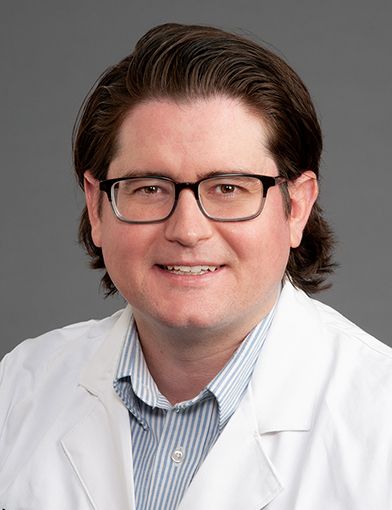
An Assistant Professor of Pediatric Surgery at Wake Forest University School of Medicine and recipient of the 2024–2026 CTSI K12 Mentored Career Development Award, Mitchell Ryan Ladd, M.D., Ph.D. is working to create a potential alternative to the long-term intravenous nutrition many children with intestinal failure depend on to grow and thrive.
While intravenous nutrition can be lifesaving, long-term dependence can lead to serious complications, including infections, liver disease and repeated hospitalizations. Mitchell Ryan Ladd, M.D., Ph.D. and his research team are exploring a different future, one in which a tissue-engineered small intestine could help restore intestinal function and reduce the burden of lifelong treatment.
K12 Support Helps Move an Idea Forward
The Wake Forest CTSI K12 Mentored Career Development Award provides early-career faculty with two years of support and multidisciplinary mentorship designed to build the skills needed to translate promising research into meaningful improvements in health.
With that support, Mitchell Ryan Ladd, M.D., Ph.D. is advancing research focused on engineering replacement intestine for children with short bowel syndrome. His team has developed an intestinal scaffold that helps muscle cells grow in the organized structure needed for normal intestinal movement, an important step toward the longer-term goal of developing a functional replacement intestine.
The research is also exploring innovative ways to assess the development of these engineered tissues. His K12 research has examined photoacoustic imaging as a noninvasive method for monitoring vascular development in implanted intestinal scaffolds, potentially helping researchers better understand when engineered tissue has reached sufficient maturity.
Translating Research Into Better Outcomes
The potential patient impact is significant. A successful tissue-engineered intestine could one day reduce children's dependence on long-term intravenous nutrition, lower the risk of associated infections and liver disease, decrease repeated hospitalizations and help restore more normal intestinal function. Ultimately, the work has the potential to improve both quality of life and long-term outcomes for children with intestinal failure.
Mitchell Ryan Ladd, M.D., Ph.D.’s work demonstrates the role CTSA hubs can play in developing translational scientists and giving early-career investigators the protected time, mentorship and support needed to pursue challenging research questions with the potential for meaningful patient impact. It is one example of how investment in the translational science workforce today can help build better treatments for tomorrow.
Learn more about Mitchell Ryan Ladd, M.D., Ph.D.’s research and how the Wake Forest CTSI K12 program is helping move this work forward in Engineering a Better Future for Children with Intestinal Failure.


