


20 Years of CTSA Impact
Summary
The Clinical and Translational Science Awards (CTSA) Program was established in 2006 to create institutional centers dedicated to developing clinical and translational science skills to better increase the speed of clinical research and better train clinical and translational scientists. During this year’s annual CTSA program meeting, the poster session celebrated 20 years of CTSA impact and explored the program's future. Visitors to the CCOS website can explore resources and features dedicated to CTSA Impact.
Article
The Clinical and Translational Science Awards (CTSA) Program was established in 2006 to create institutional centers dedicated to developing clinical and translational science skills to better increase the speed of clinical research and better train clinical and translational scientists. During this year’s annual CTSA program meeting, CTSA members convened to discuss and consider Advancing the Translational Pathway. Session topics ranged from implementation of AI to solve clinical and research challenges to career training and new clinical trial design innovations.
Fall CTSA Program Meeting Poster Session
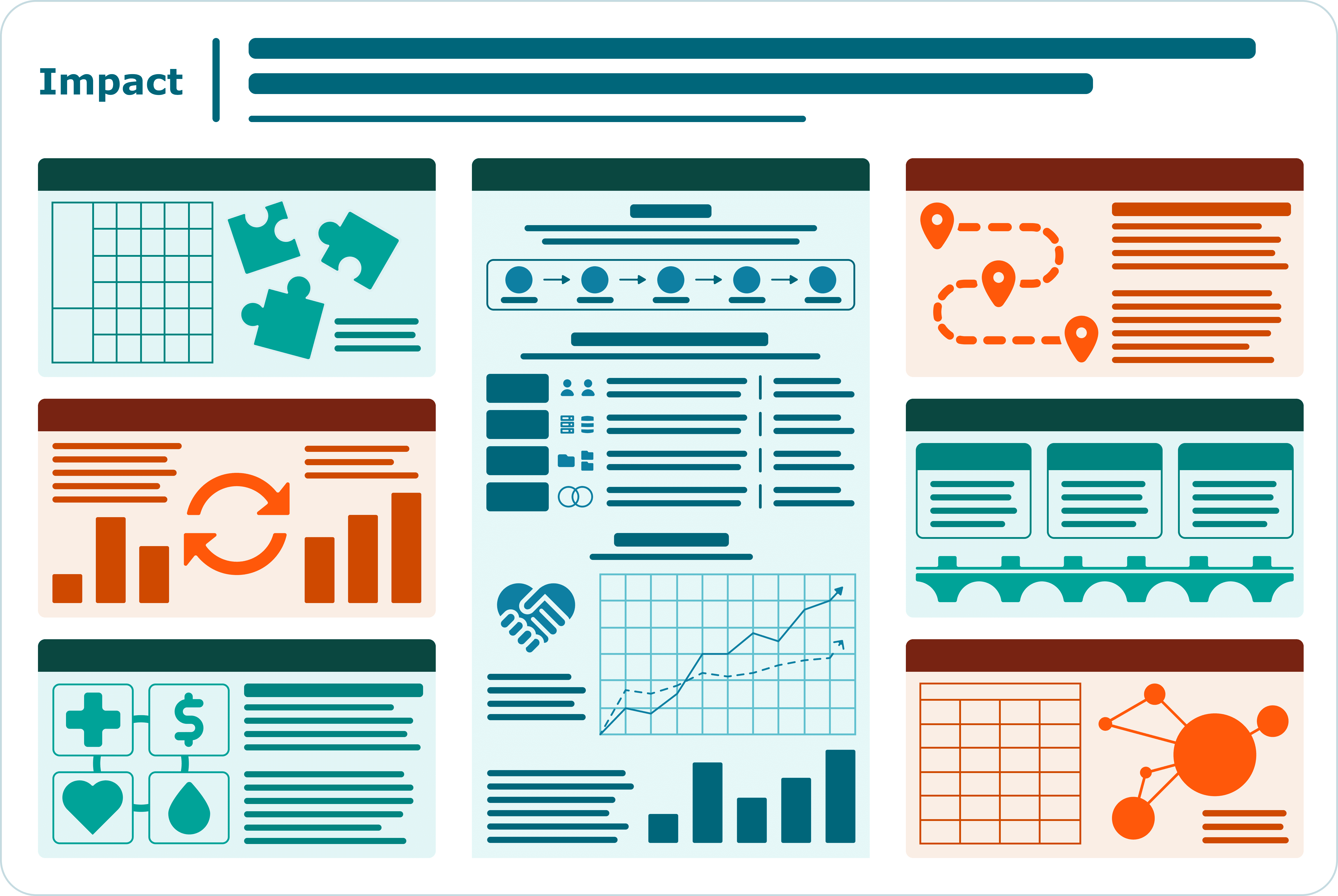
Marking two decades of the CTSA Program, this year’s poster session celebrated 20 years of CTSA impact while looking ahead to the program’s future. Centered on the theme 20 Years of CTSA Impact – Past, Present, and Future, the session invited CTSA hubs to showcase how their research, workflows, and people have contributed to translational science since the program began in 2006. The poster session also provided an opportunity for investigators to share their work, connect with colleagues, and learn from the experiences and accomplishments of other CTSA hubs.
Posters were aligned with four domains of the Translational Science Benefits Model:1 clinical and medical contributions, community and public health, economic benefits, and policy. Posters were evaluated on their demonstrated impact, alignment with the TSBM domain, and overall design. Additional consideration was given to measurable outcomes, potential for broader adoption within the CTSA Program, and contributions to long-term, real-world impact. Based on these evaluations, one poster from each of the four domains was selected to present a lightning talk during the poster session to highlight the demonstrable impact made by the CTSA.
- Harvard Catalyst – Clinical and Medical Contributions: Harvard Catalyst’s poster featured their efforts creating scalable clinical research infrastructure and demonstrated how they took solutions implemented locally and turned them into national platforms, such as Smart IRB.
- The University of New Mexico Health Sciences CTSC – Community and Public Health: UNMHS CTSC’s poster describes how they took an inpatient addiction consult service model in a randomized trial and leveraged it to enact change in clinical guidelines and supportive policies, leading to documented disease reduction and increased cost savings.
- The University of Illinois Chicago CCTS – Economic Benefits: The UIC CCTS poster explained the development and testing of an AI agent the hub leveraged to assist in documenting, tracking, and summarizing the research and academic achievements of their K12 scholars after completion of the career development program. Using the AI agent, they reduced the human hours required for this activity by 98% per scholar, a major increase in efficiency.
- Georgia CTSA – Policy: Georgia CTSA’s poster focused on their evaluation of the CTSA Program’s publications and their impact on clinical guidelines and policies. By evaluating over 150k publications funded by the CTSA since its creation in 2006, they found that 9% of CTSA publications were referenced in clinical guidelines.
These posters are just a sample of the great work on display during the CTSA poster session, but they demonstrate the depth and breadth of the impact of the CTSA program and highlight the program’s potential in the future. All program meeting posters are available for review online.
CTSA Impact
Together, CTSA Program hubs play a critical role in advancing translational science, turning scientific discoveries into solutions that benefit patients and communities, and supporting NCATS’ vision of “more treatments for all people more quickly.” The CCOS Impact page brings these geographically dispersed efforts together in one centralized location to document, demonstrate, and enable the collective impact of the CTSA Program. Here, you can:
- Explore a catalog of the nearly 150,000 CTSA-funded publications since the program’s creation,
- Find real-world examples of CTSA impact,
- Discover CTSA groups dedicated to coordinating, defining, and measuring impact, and
- Investigate CTSA impact evidence on the new CTSA Impact Data Analytics page (coming soon!).
We invite everyone to explore the impact resources to get a better understanding of the CTSA program’s impact on translational science and human health. Questions? Contact support@ccos.ctsa.io.
- Luke DA, Sarli CC, Suiter AM, et al. The Translational Science Benefits Model: A New Framework for Assessing the Health and Societal Benefits of Clinical and Translational Sciences. Clin Transl Sci. 2018 Jan;11(1):77-84. doi: 10.1111/cts.12495.


