U.S Department of Health & Human ServicesHHSNational Institutes of HealthNIHNCATSNCATSCTSA ProgramCTSA
CTSA CCOS

Coordination, Communication, and Operations Support

RegisterLog In
Program Meetings and Collaborative Workshops
Need Help
Log in to view meeting materials such as meeting slides and recordings

2026 Fall CTSA Program Annual Meeting

CTSA Banner Image

2026 Fall CTSA Program 

Annual Meeting
Submitted Poster

15 Years of Program Impact: UC Irvine CTSA Pilot Awards and Campus-Community Collaboration Incubator Awards

Margaret Schneider

Hub not available
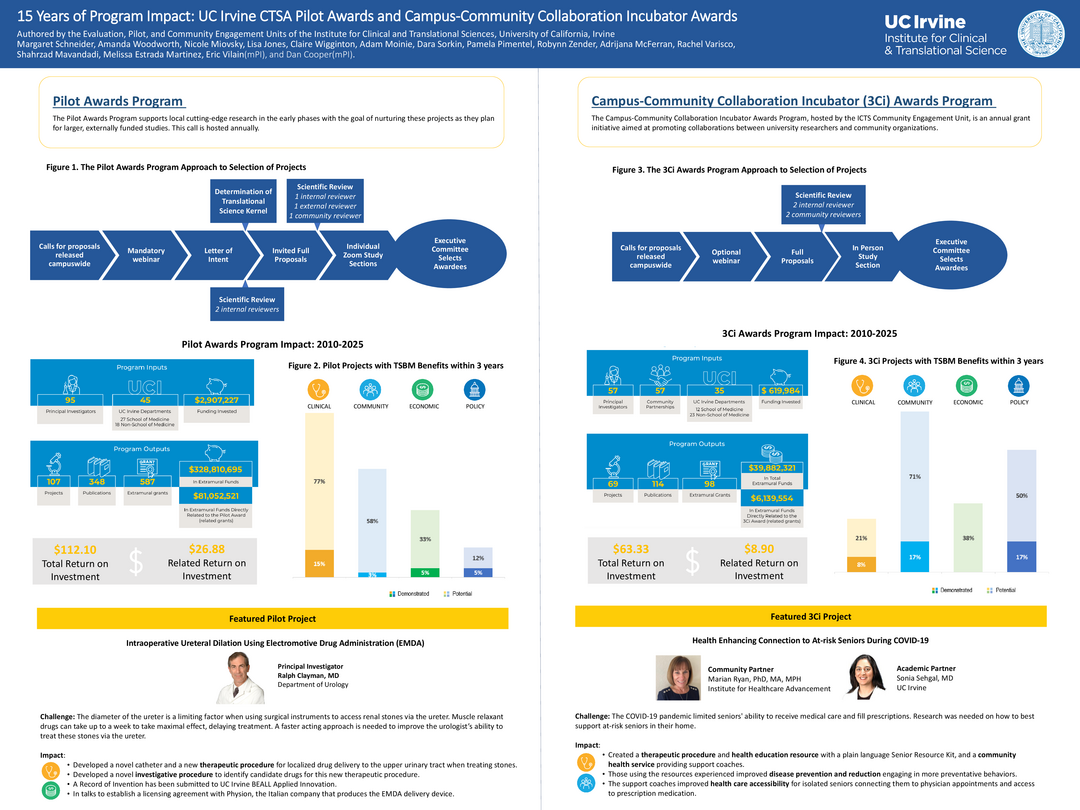
Since its inception as a Clinical and Translational Science Award hub in 2010, the University of California, Irvine Institute for Clinical and Translational Sciences (UC Irvine ICTS) has funded promising translational studies through Pilot Awards to nurture innovative research on the path from lab to life, and Campus-Community Collaboration Incubator (3Ci) Awards to foster deep ties for conducting impactful community-partnered science. Each UC Irvine ICTS funding mechanism uses a rigorous selection process, with the Pilot and 3Ci awards involving community and academic reviewers to identify projects designed as the highest quality science and with a high promise of real-world impact. From 2010-2025, the Pilot program funded 107 projects that generated 348 publications. For every dollar invested by ICTS, there was a $26.88 net return in extramural grant funding obtained for projects directly related to the pilot award. Among projects funded since 2019, 92% of Pilot projects reported one or more expected translational science benefits, with 15% of the projects resulting in a verified clinical or medical benefit within 3 years of funding. Through the same period, the 3Ci program funded 57 campus-community partnerships that generated 114 publications. For every dollar invested by ICTS, there was a $8.90 net return in extramural grant funding obtained for projects directly related to the 3Ci award. Among projects funded since 2020, 88% of 3Ci projects reported one or more expected translational science benefits, with 17% of the projects resulting in a verified community or public health benefit within 3 years of funding. Two standout projects from the UC Irvine ICTS awards programs, include: Dr. Ralph Clayman’s Pilot project that developed a novel catheter with localized drug delivery for treating kidney stones, resulting in 3 demonstrated benefits in the Clinical and Medical domain. Dr. Mirian Ryan (community partner) and Dr. Sonia Sehgal’s 3Ci project provided support coaches for seniors and created a plain language Senior Resource Kit, resulting in four demonstrated benefits in the Community and Public Health domain and one demonstrated benefit in the Clinical and Medical domain.
Submitted Poster

20 Years and Beyond: How OCTRI has advanced -and will continue to advance- community and clinical benefits through cross-program collaboration

Caitlin Dickinson

Hub not available
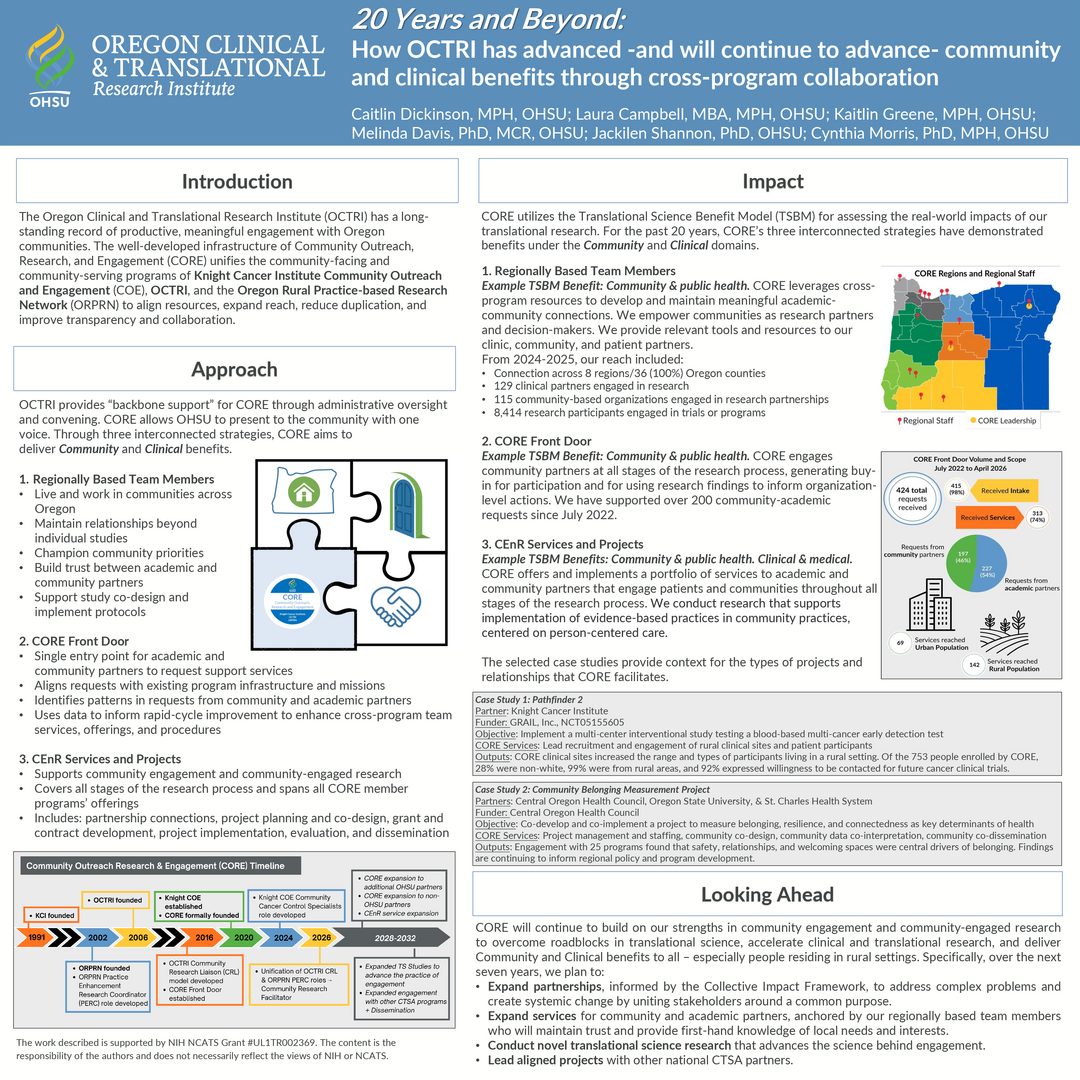
Introduction: The Oregon Clinical and Translational Research Institute (OCTRI) has a long-standing record of productive, meaningful engagement with Oregon communities. The well-developed Community Outreach, Research, and Engagement (CORE) infrastructure unifies the community-facing and community-serving programs of the Knight Cancer Institute Community Outreach and Engagement (COE), OCTRI, and the Oregon Rural Practice-based Research Network (ORPRN). Approach: OCTRI provides “backbone support” for CORE through administrative oversight and convening. 1. Regionally Based Team Members- CORE funds Community Research Facilitators (CRFs) who live and work in communities across Oregon. CRFs maintain relationships beyond individual studies and facilitate community engagement in research. They champion community priorities; build trust between academic and community partners; support study co-design; and implement protocols. 2. Front Door- CORE Front Door is the single-entry point for academic and community partners to request support services. It strengthens OHSU’s ability to coordinate how it receives, responds to, tracks, and supports community-engaged research partnerships. 3. CEnR Services and Projects- Services provided by CORE member organizations support community engagement and community-engaged research and may include partnership connections, project planning and co-design, grant and contract development, project implementation, evaluation, and dissemination. Services and support cover all stages of the research process and span all CORE member programs’ offerings. Impact: CORE uses the Translational Science Benefit Model (TSBM) to assess the real-world impacts of our translational research. 1. Regionally Based Team Members- Community and public health. CORE leverages cross-program resources to develop and maintain meaningful academic-community connections. We empower communities as research partners and decision-makers. We provide relevant tools and resources to our clinic, community, and patient partners. 2. CORE Front Door- Community & public health. CORE engages community partners at all stages of the research process, generating buy-in for participation and for using research findings to inform organization-level actions. 3. CEnR Services and Projects- Community and public health. Clinical and medical. CORE offers and implements a portfolio of services for academic and community partners that engage patients and communities throughout all stages of the research process. We conduct research that supports implementing evidence-based practices in community settings, centered on person-centered care. Looking Ahead: CORE will continue to build on our strengths in community engagement and community-engaged research to overcome roadblocks in translational science, accelerate clinical and translational research, and deliver Community and Clinical benefits to all – especially people residing in rural settings.
TIN Poster

A Decade of Innovation. A Lifetime of Impact. 10 Years of the Trial Innovation Network

Sarah Nelson

TIN
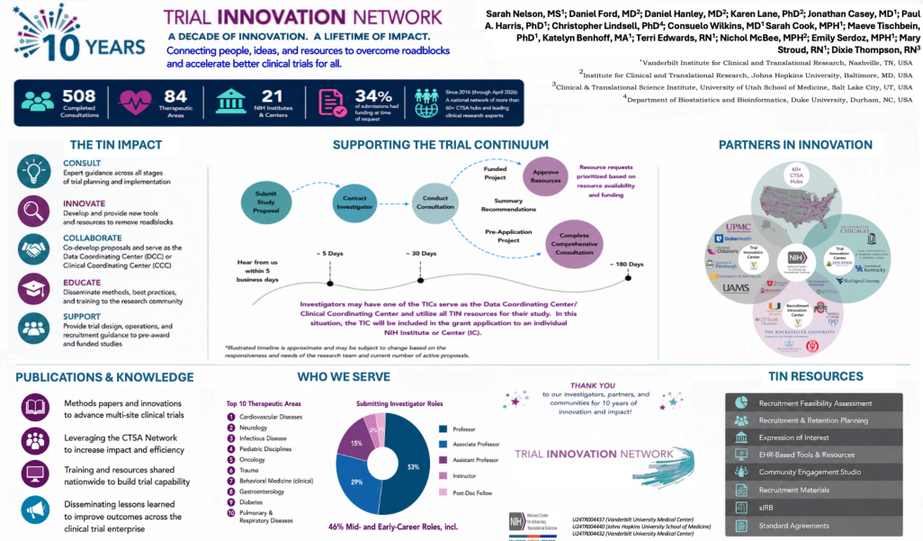
Title: A Decade of Innovation. A Lifetime of Impact. 10 Years of the Trial Innovation Network Background: The Trial Innovation Network (TIN), a partnership funded by the National Center for Advancing Translational Sciences (NCATS) within the Clinical and Translational Science Award (CTSA) program, addresses critical challenges in multi-site clinical research. By leveraging the extensive national CTSA infrastructure, its network partners, and fostering collaboration, the TIN accelerates the translation of innovative research into therapeutic solutions. This poster shows the work the TIN has done for the past 10 years. Methods: Two Trial Innovation Centers (Johns Hopkins University, Vanderbilt University Medical Center) and one Recruitment Innovation Center (Vanderbilt University Medical Center) provide no cost consultation services for multicenter studies, connecting clinical investigators with domain experts, strategic partners, and leveraging the entire CTSA network to optimize trial design and operational efficiency. The TICs and RIC have formed partnerships with more than a dozen CTSAs to enhance and strengthen the TIN consultation experience. Results: By working closely with investigators, the TICs and RIC have provided resources and facilitated numerous successful consultations across the TIN. They have been able to embed and test their innovations into the clinical trials that come through the TIN proposal and consultation process Conclusion: The TIN offers a sustainable model for overcoming barriers in multisite clinical trials with innovative solutions, supporting the future optimization of clinical research.
Submitted Poster

A Proposed Translational Economic Evaluation Matrix (TEEM) Framework for CTSA Impact

Sondip Mathur

Hub not available
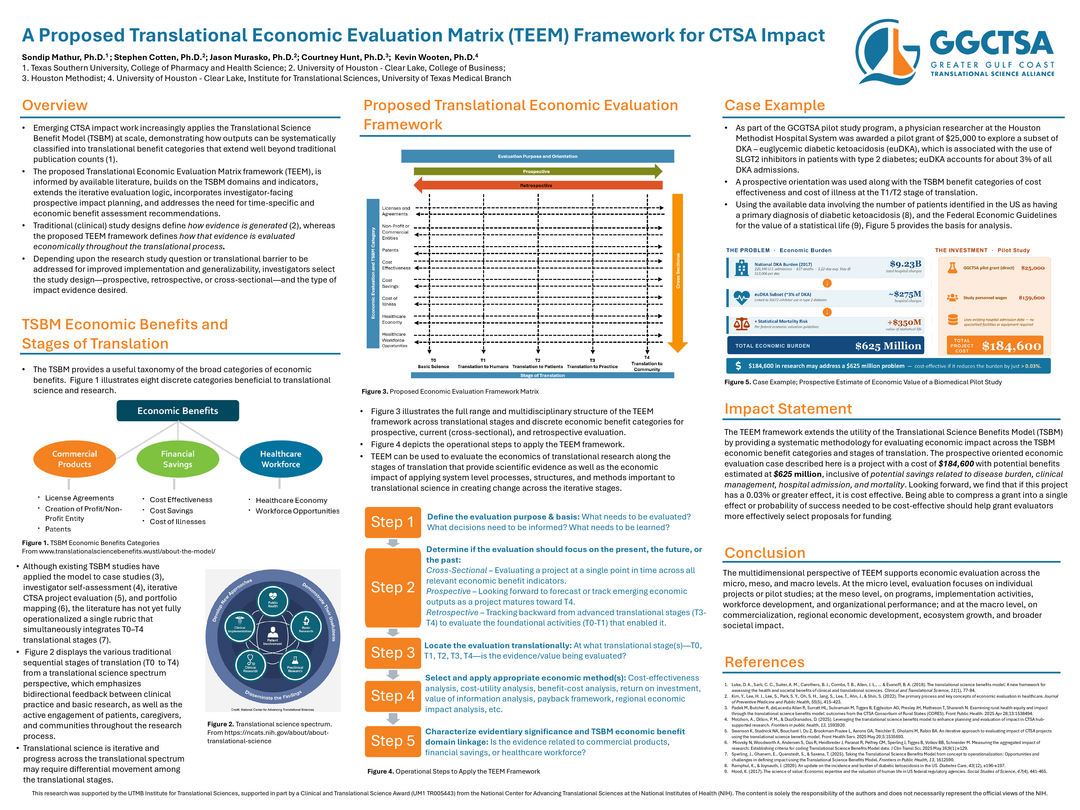
Emerging CTSA impact work increasingly applies the Translational Science Benefit Model (TSBM) at scale, demonstrating how outputs can be systematically classified into translational benefit categories that extend beyond traditional publication counts (Luke et al.,2018). A Translational Economic Evaluation Matrix (TEEM) framework is presented, described, and applied to a real case (CTSA research pilot funding) which is informed by available economic evaluation literature, builds on the TSBM domains and indicators, extends the iterative evaluation logic, incorporates investigator-facing prospective impact planning, and addresses the need for time-specific and economic benefit assessment recommendations. The eight specific economic benefits proposed by the TSBM are reviewed, as well as the iterative nature of the stages of translation. The TEEM framework, which incorporates the use of the eight TSBM economic categories, the stages of translation (T0-T4), as well as temporal evaluation orientations involving prospective, cross- sectional, and retrospective designs, is presented. Five operational steps to applying the framework are reviewed: 1) defining the evaluation purpose; 2) establishing the evaluation’s (temporal) orientation(s) to support; 3) locating the evaluation translationally; 4) selecting and applying appropriate economic method(s) (e.g., cost utility, return on investment, regional economic impact analysis, etc.); and 5) characterizing evidentiary significance and TSBM domain linkage. A prospectively oriented case is presented using a funded research pilot investigating euglycemic diabetic ketoacidosis (euDKA) and the cost associated with hospitalization and morbidity. The case displays the potential impact of utilizing positive findings from the pilot study involving the TSBM categories of research study cost effectiveness and reduced cost of illness and mortality. It is suggested that the proposed TEEM framework can be useful to CTSA evaluators and administrators in evaluating translational assets for which scientific, operational, economic, and societal value mature over time.
Submitted Poster

A Study to Help Newborns Suffering from Opioid Withdrawal Informed Changes in Neonatal Research

Lisa Serrano

Hub not available
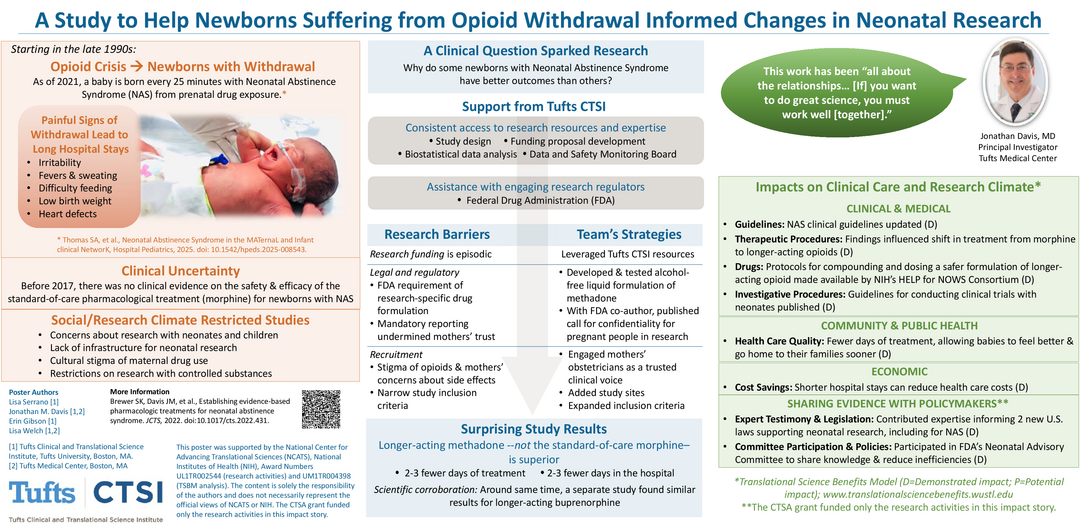
Starting in the late 1990s, a growing number of newborns are exposed to addictive drugs before birth--usually a prescription pain killer, heroin, or fentanyl--and begin withdrawal after delivery. Newborns with this condition, neonatal abstinence syndrome (NAS), have a range of signs of withdrawal and can stay in the hospital for weeks. As of 2021, more than one newborn developed NAS every 25 minutes (1). Until 2017, there was no research on which medicines best treat NAS. Clinicians were using drugs created for adults and estimating the doses for neonates. In 2012, Dr. Jon Davis and a team at Tufts Medical Center led the first large study with newborns to compare the most used drug treatment (morphine) to a longer-acting medicine (methadone). They faced many obstacles--legal barriers to studies with controlled substances; difficulty recruiting mothers due to stigma, legal fears, drug side effects, and narrow inclusion criteria; and social and regulatory concerns about research risks to babies. Tufts Clinical and Translational Science Institute (CTSI) helped make this study possible. Biostatisticians carefully designed and redesigned the protocol to receive NIH funding for a multi-site study and expertly analyzed complex data. Tufts CTSI also provided a Data & Safety Monitoring Board and assisted Dr. Davis in engaging regulators to address research obstacles. Study results were surprising. The longer-acting medicine (methadone), not the standard of care (morphine), led to fewer days of treatment and shorter hospital stays. Around the same time, another study corroborated these findings with a similar longer-acting medicine (buprenorphine). Based on these results, the American Academy of Pediatrics published new guidelines recommending that the longer-acting medicines be used to shorten treatment length and hospital stays, which can lower health care costs. Protocols for compounding a safer drug formulation and symptom-based dosing also became available. Just as important, the research helped improve the environment for studying treatments for newborns. Dr. Davis worked with regulators and legislators to ensure treatments for newborns are shown to be safe and effective, including the Protecting our Infants Act of 2015 and requiring that the Food and Drug Administration (FDA) have experts in newborn medicine (2). He joined FDA committees and worked with national and international partners to develop best practices for neonatal research. This study influenced NAS treatment--reducing patient suffering, family burden, and hospital costs--and strengthened the climate for research with newborns. What began as a question about treating newborns with NAS at one hospital grew into a national effort to improve care for some of the smallest and most vulnerable patients. 1Thomas SA, et al., Neonatal Abstinence Syndrome in the MATernaL and Infant clinical NetworK, Hosp Pediatr, 2025. 2The CTSI grant funded only the research activities in this impact story.
Submitted Poster

A Tool for Estimating Clinical Trial Operational Risk

Martin S. Zand

Hub not available
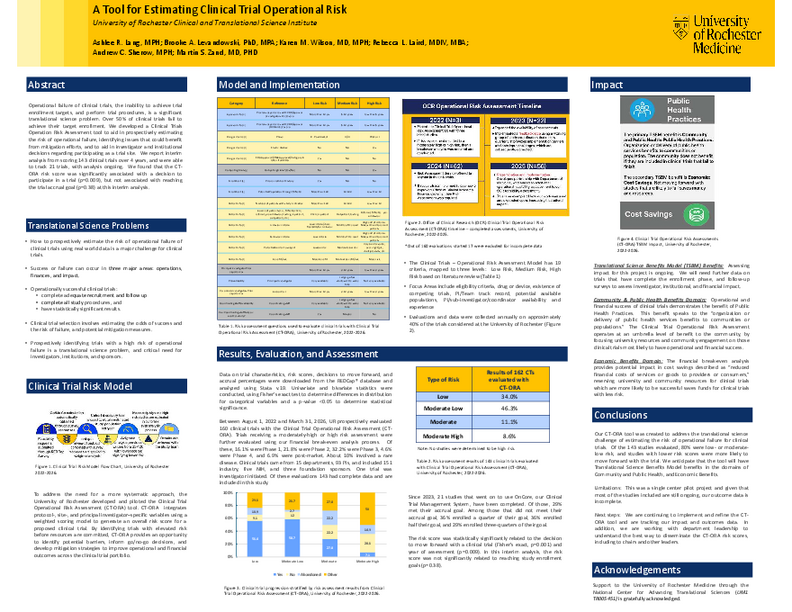
Operational failure of clinical trials, the inability to achieve trial enrollment targets, and perform trial procedures, is a significant translational science problem. Over 50% of clinical trials fail to achieve their target enrollment. We developed a Clinical Trials Operation Risk Assessment tool to aid in prospectively estimating the risk of operational failure, identifying issues that could benefit from mitigation efforts, and to aid in investigator and institutional decisions regarding participating as a trial site. We report interim analysis from scoring 143 clinical trials over 4 years, and were able to track 21 trials, with analysis ongoing. We found that the CT-ORA risk score was significantly associated with a decision to participate in a trial (p=0.009), but not associated with reaching the trial accrual goal (p=0.38) at this interim analysis.
Submitted Poster

Advancing Miami CTSI Initiatives Towards Community and Public Health Benefits

Sheela Dominguez

Hub not available
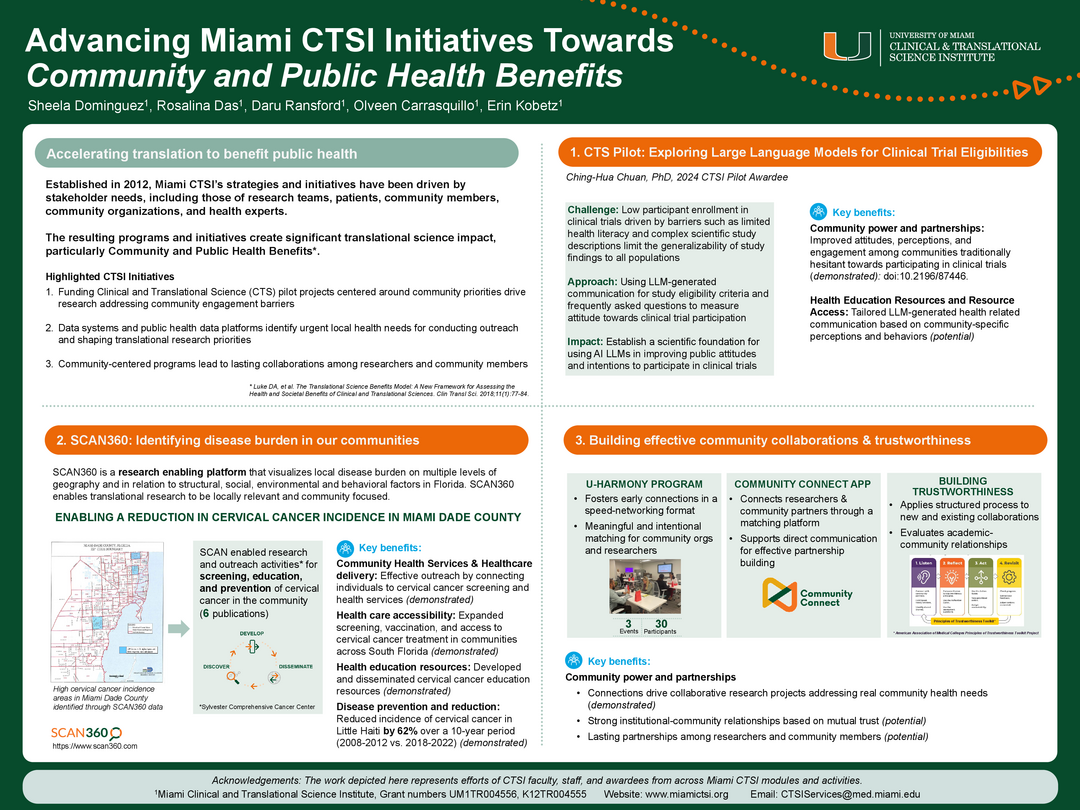
Established in 2012, the University of Miami Clinical and Translational Science Institute (Miami CTSI) has developed, demonstrated, and disseminated programs that accelerate research across the translational science spectrum – from basic, pre-clinical, and clinical research to clinical implementation and public health outcomes. Miami CTSI’s strategies are shaped by the needs of various stakeholders, including research teams, patients, community members, community organizations, and health experts. The Miami CTSI creates significant translational impact, and in particular community and public health benefits, through initiatives such as funding pilot projects, establishing infrastructure to support research, and creating community engagement resources and opportunities. As highlighted in the poster, examples of these include: Funding Pilot Projects: A 2024 Clinical and Translational Science (CTS) pilot project established a scientific foundation for using large language models in improving public attitudes and intentions to participate in clinical trials, directly addressing the persistent translational science barrier of low participant enrollment in clinical trials. Infrastructure to Support Research: SCAN360, a research-enabling platform, visualizes local disease burden in Florida and has enabled research and health intervention strategies in communities in South Florida for diseases such as cervical cancer. Community Engagement Resources & Opportunities: CTSI-developed programs focusing on community engagement enable meaningful connections between community organizations and researchers and build strong academic-community partnerships based on mutual trust. Together, these CTSI initiatives demonstrate benefits in community collaboration and partnerships, community health services, healthcare delivery, healthcare accessibility, health education resources and disease prevention and reduction.
Submitted Poster

Advancing Translational Science Through Regulatory Infrastructure, Workforce Development, and National Collaboration: Twenty Years of CTSA Impact at Duke University

Erika Segear

Hub not available
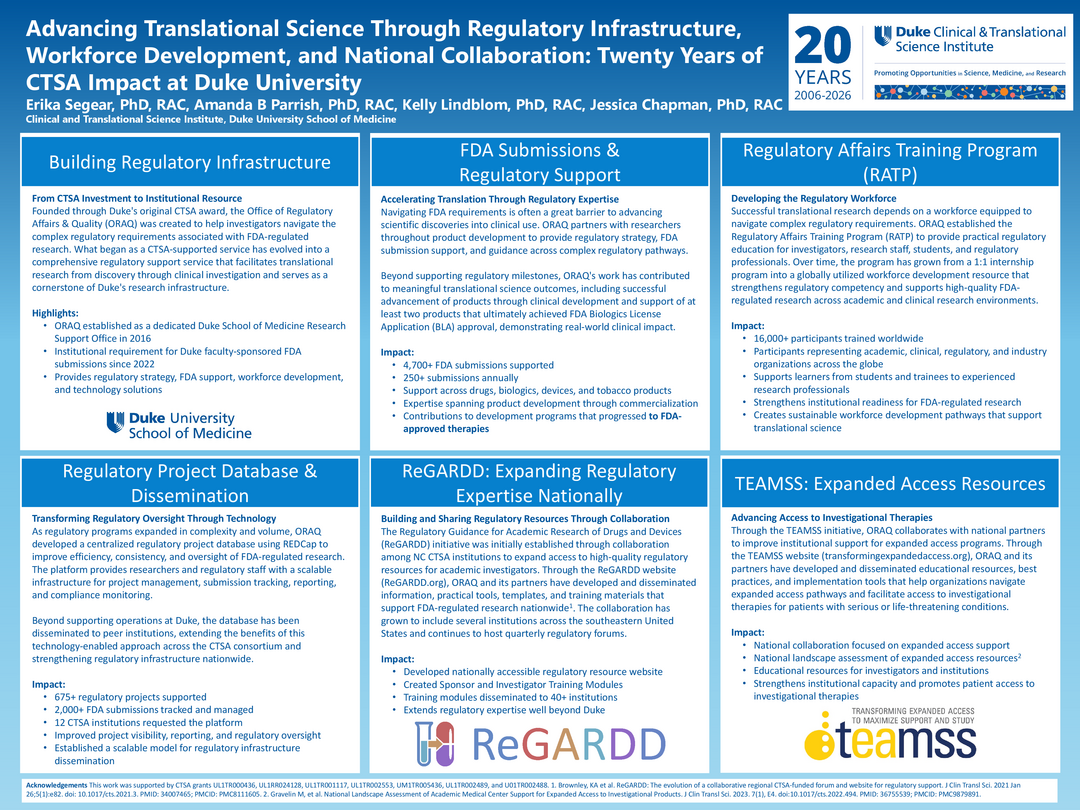
Successful translation of scientific discoveries into medical products requires regulatory expertise, infrastructure, and workforce development. Recognizing the challenges academic investigators face in navigating FDA requirements, Duke University leveraged support from the Clinical and Translational Science Award (CTSA) Program to establish regulatory affairs resources that accelerate translational research. What began as a CTSA-supported service evolved into a comprehensive regulatory ecosystem that now serves as a cornerstone of Duke's translational research enterprise. Duke institutionalized these efforts through creation of the Office of Regulatory Affairs & Quality (ORAQ) in 2016 and further integrated regulatory support into its research infrastructure by requiring ORAQ engagement for Duke-sponsored FDA-regulated submissions in 2022. This progression illustrates how CTSA-supported innovation can create sustainable institutional capacity. ORAQ provides regulatory strategy, FDA submission support, workforce development, and technology-enabled solutions that advance translational research from discovery through clinical investigation. Since its inception, ORAQ has supported more than 4,700 FDA submissions, averaging over 250 annually. To improve efficiency, oversight, and compliance, ORAQ developed a centralized regulatory project database that has supported more than 675 projects and facilitated management of over 2,000 FDA submissions. The database has also been shared with 12 CTSA institutions, extending its impact across the consortium. To strengthen the regulatory workforce, ORAQ established the Regulatory Affairs Training Program (RATP), which has trained more than 16,000 participants worldwide. ORAQ also developed Sponsor and Investigator Training Modules, which have trained 172 Duke faculty and 497 staff and have been distributed to more than 40 institutions. These programs expand regulatory knowledge and promote best practices across the clinical research workforce. ORAQ's impact extends nationally through the Regulatory Guidance for Academic Research of Drugs and Devices (ReGARDD) and Transforming Expanded Access to Maximize Support and Study (TEAMSS) initiatives. ReGARDD provides investigators with freely accessible regulatory resources, templates, and tools for FDA-regulated research, while TEAMSS develops best practices and educational resources to improve expanded access programs and patient access to investigational therapies. Together, these initiatives strengthen institutional capacity, expand regulatory expertise, and support more efficient translation of medical innovations into patient care. As the CTSA Program marks 20 years of impact, ORAQ demonstrates how strategic investment in regulatory affairs can evolve from a grant-supported resource into a sustainable institutional asset that advances translational research, develops the workforce, enables clinical innovation, and amplifies impact far beyond a single institution.
Submitted Poster

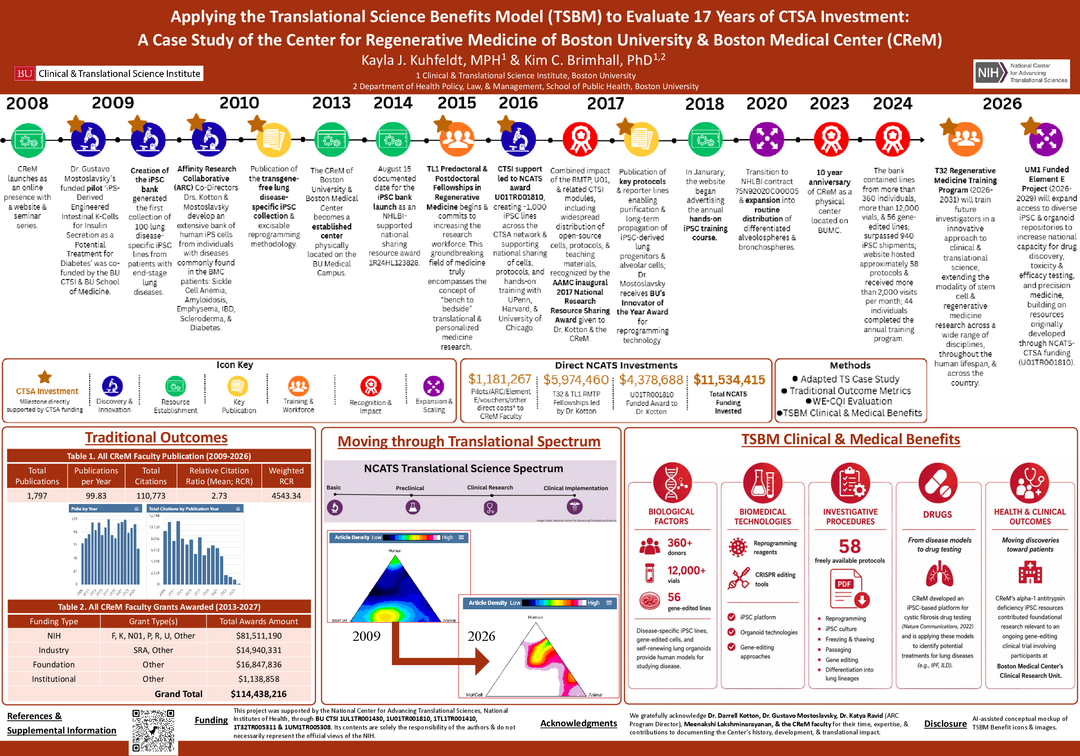
Applying the Translational Science Benefits Model (TSBM) to Evaluate 17 Years of CTSA Investment: A Case Study of the Center for Regenerative Medicine of Boston University & Boston Medical Center (CReM)

Kayla Kuhfeldt

Hub not available

Background: Clinical translation needs scientific discoveries with effective infrastructure, innovative technologies, and multidisciplinary collaborations that enable discoveries to progress toward improved patient care. The Translational Science Benefits Model (TSBM) provides a structured framework for evaluating these downstream impacts. We apply the Clinical & Medical domain of the TSBM to evaluate how Clinical and Translational Science Award (CTSA) investments catalyzed the development of the Center for Regenerative Medicine of Boston University & Boston Medical Center (CReM) and advanced regenerative medicine along the translational continuum. Methods: An adapted translational science case study was conducted using institutional records, program documentation, publicly available reports and data, and historical milestones describing CReM's development. The evaluation mapped major CTSA-supported investments over time to the Clinical & Medical domain of the TSBM through the developmental pathway of CReM from its initial 2009 Boston University CTSI Pilot Award through the establishment of an Affinity Research Collaborative, institutional support as a university center, the CTSA-supported TL1 Training Program, and its subsequent growth as an internationally recognized regenerative medicine center. To evaluate translational impact, identified milestones and outputs are systematically mapped to the Clinical & Medical domain of the TSBM, examining how CTSA-supported investments contributed to the development of disease models, regenerative medicine technologies, investigative procedures, and biological factors that advance clinical research and enable future improvements in patient care. Results: CTSA investments supported the evolution of CReM from a pilot into an internationally recognized regenerative medicine center. Within the Clinical & Medical domain, these investments enabled the development and dissemination of induced pluripotent stem cell technologies, human disease models, organoid systems, gene editing approaches, and shared resources that improve investigators' ability to study disease mechanisms and evaluate therapeutic strategies. CTSA-supported infrastructure also fostered sustained collaboration among basic scientists, engineers, and clinician-investigators, accelerating translational research across multiple disease areas. The establishment of the TL1 Program further strengthened the clinical translational workforce by preparing investigators to move regenerative discoveries toward clinical application using interdisciplinary translational science competencies. Conclusions: Rather than evaluating a single scientific breakthrough, this poster illustrates how sustained investments in research infrastructure, collaboration, and workforce development create the conditions necessary for future innovation. The CReM demonstrates how CTSA-supported ecosystems accelerate progress from discovery to improved clinical care.
Submitted Poster

Assessing the Clinical and Medical Impact of KL2 Scholars Using the Translational Science Benefits Model: Case Studies from the University of Kentucky Center for Clinical and Translational Science

Megan Dickson

Hub not available

Kentucky, including Central Appalachia, experiences some of the nation's highest rates of heart disease, cancer, and drug overdose, among other significant health challenges. In response, the University of Kentucky's Center for Clinical and Translational Science (UK CCTS) was established in 2006. Through research funding, training, infrastructure, and community engagement, the UK CCTS fosters innovative team science to address these and other critical health issues among Kentuckians. A key component of the UK CCTS mission is also to supportprogramming that prepares the next generation of clinical and translational researchers. One such initiative is the KL2 Career Development Program, which provides funding to early-career scientists while supporting them in developing clinical and translational research viastructured coursework, experiential learning, mentored research, team science, and leadership training. The first scholars were awarded funding through the KL2 Career Development Program in 2011. Since then, 26 faculty members have completed the program - 97% of whom graduated from the program having submitted a grant application as Principal Investigator. Using the Translational Science Benefits Model, this project features case studies of three UK CCTS KL2 Scholars - two graduates and one current scholar - to highlight past, present, and future clinical and medical impacts of their research. Example impacts include improved hearing healthcare systems and earlier intervention to improve hearing outcomes, improved quality of life and cancer care for advanced cancer patients and their caregivers, and new approaches to treating urinary symptoms that reduces symptom burden. Collectively, these case studies demonstrate the KL2 Career Development Program's role in developing innovative translational scientists whose work generates meaningful clinical and medical impacts, including improved access to care, enhanced quality of life, and the development of novel therapeutic approaches.

Coordination, Communication, and Operations Support (CCOS) is funded by theNational Center for Advancing Translational Sciences, National Institutes of Health.

HomeContact UsPrivacy PolicyAccessibility Statement
Freedom of Information (FOIA)Office of Inspector General (OIG)Cookie Preference
X-TwitterBluesky LogoLinkedIn icon