



Penn State CTSI Internship Program Forges Clinical Research Workforce Future
Summary
Article
HERSHEY, Pa. — For undergraduate students interested in the biomedical sciences, the path from the classroom to a career in clinical research can sometimes feel hidden. But through the Penn State Clinical and Translational Science Institute (CTSI) Undergraduate Clinical Research Training (UCRT) Program, that pathway is more than illuminated — it is a launchpad for the next generation of medical discovery professionals, according to Andrea Stevens, program director.
Now celebrating six years of successful cohorts, the UCRT program aims to provide a detailed clinical research practice core curriculum and hands-on internship opportunities, whilst fostering networking with peers and fellow professionals in clinical research.
"It is truly a workforce development pipeline curated for undergraduate students in the biomedical sciences," Stevens said. "The program combines high-impact experiential learning with intentional career preparation for Penn State students."
Addressing a critical workforce gap
Historically, clinical research coordinators have largely been registered nurses. However, as the medical field faces nursing shortages due to early retirement and general attrition, a critical need has emerged to diversify who serves as clinical research coordinators. The UCRT program was built to address these specific workforce gaps by focusing on an underutilized talent pool: undergraduate students in fields like psychology, sociology and biobehavioral health.
The program draws primarily biobehavioral health majors from Penn State's Greater Allegheny, New Kensington, Harrisburg and University Park campuses. After learning the foundations learned in the HHD410/BBH471: Clinical Research Practice course, students embark on internships to explore clinical research in rural and urban settings, as well as in virtual and in-person capacities.
Immersive experiences at Allegheny Health Network
A cornerstone of the program is its robust partnerships with institutions like the Allegheny Health Network (AHN) Research Institute and Penn State College of Medicine. Stevens works closely with partners, including Kevin Gardner, director of the Clinical Trials Office at the college, to help interns navigate the process seamlessly and receive structured, continued education.
During the internships, students work rigorously with experienced mentors, gaining hands-on experience in clinical research coordination, including the informed consent process, study start-up and close-out, regulatory affairs, good clinical practice and direct patient interactions.
This past summer, the AHN Research Institute hosted its sixth annual 11-week clinical research internship session for Penn State undergraduates. The 20-hour per week experience is designed to be immersive, explained Samantha Cavolo, clinical research manager and intern adviser at AHN.
"Interns gained hands-on exposure to crucial aspects of clinical research, spanning the informed consent process and handling vital human specimens, to understanding the intricacies of clinical trial billing," Cavolo said. "Perhaps most impactful, the interns connected directly with clinical trial participants as they embark on what could become groundbreaking therapeutic or surgical interventions."
The summer curriculum is packed with real-world applications, including practical training simulations at West Penn Hospital's School of Nursing STAR Center and the awe-inspiring opportunity to witness open-heart surgery from the observation deck at Allegheny General Hospital.
The 2026 session also marked the inaugural AHN Faculty Forum, where interns heard directly from experts, including principal investigators, Institutional Review Board specialists, and site statisticians.
Building professional identity and confidence
Beyond technical skills, the UCRT program places a heavy emphasis on professional development. Students are expected to communicate their work, develop confidence in discussing research and translate their summer experiences into a professional presentation.
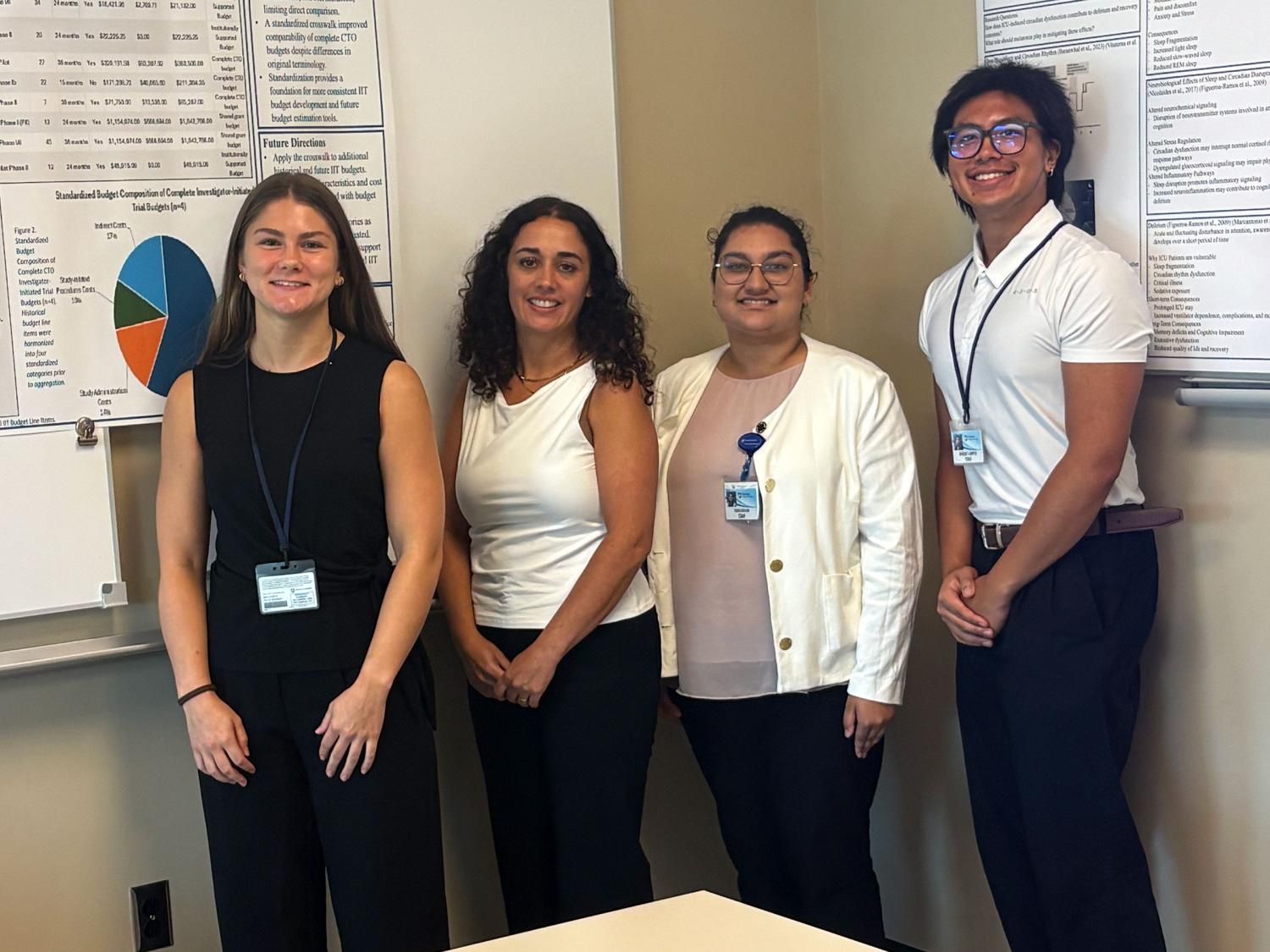
The internship culminates in a Research Presentation Day. During the 2026 showcase, interns like Tasneem Ekhtiar, Aiden Yuscinsky and Antonio Cristallini received overwhelmingly positive feedback from faculty and research professionals for their engaging presentations, deep understanding of complex subject matter and high level of professionalism. Post-internship surveys from the 2026 cohort showed the students had a marked increase in confidence regarding career pathways, seeking mentorship and evaluating scientific literature.
"The internship helps students form their professional identity by allowing them to work with research staff who have similar values and skillsets," Stevens said.
A pipeline to employment
The ultimate measure of a workforce development program is its ability to transition students into the field — and the UCRT program is delivering remarkable results, according to Stevens.
Since partnering with the Penn State College of Medicine in 2023, 20 UCRT students have completed the summer internship program, with five of those individuals going on to work full-time in clinical research at the college.
Similarly, 21 UCRT students have completed the AHN program, with five of them now working full time at AHN.
"We are thrilled to see the lasting impact of this program," Cavolo said. "Many Penn State graduates who completed the internship have continued to thrive in the field, including inspiring success stories like Olivia Moore and Korrine McCutcheon, now valued clinical research coordinators at Allegheny General Hospital. They are just two examples of the many bright minds forging the future of medical discovery!"
To learn more about the Undergraduate Clinical Research Training Program, visit the Penn State CTSI website.
https://www.psu.edu/news/clinical-and-translational-science-institute/story/penn-state-ctsi-internship-program-forges


