



MUSC Researcher Wins Prestigious Translational Science Award
Summary
Lindsay Squeglia, Ph.D., earns national honor for advancing mentorship and translational science workforce development at MUSC.
Article
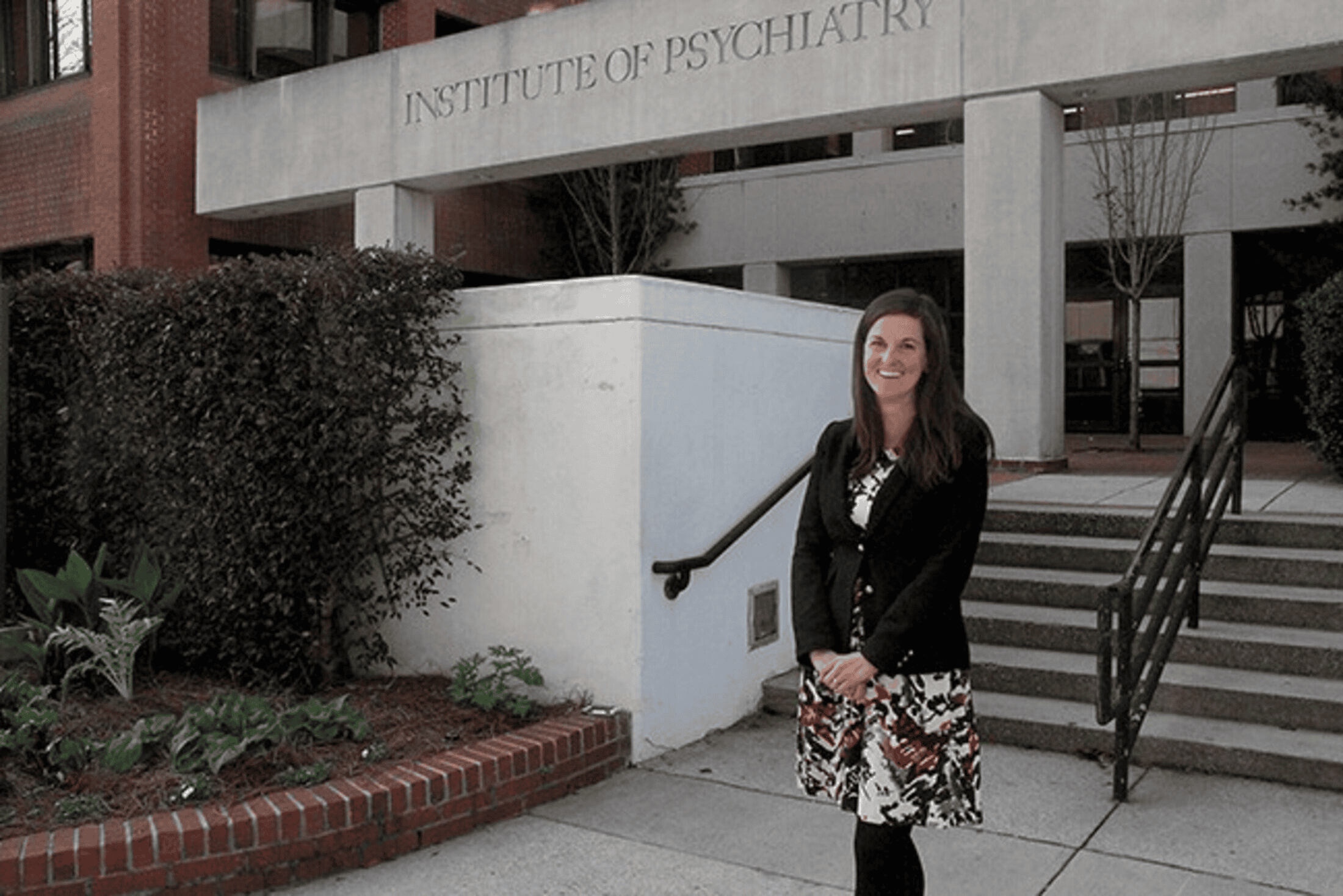
MUSC researcher Lindsay Squeglia, Ph.D., has been named the winner of the Association for Clinical and Translational Science (ACTS) Award for Supporting an Excellent Translational Science Workforce. This honor recognizes her national leadership in mentorship, workforce development, and translational research. Squeglia is a professor and licensed clinical psychologist in the Department of Psychiatry and Behavioral Sciences.
Among Squeglia’s many influential roles, she is the clinical and scientific advisor for the “Just Say Know” school-based substance use prevention program and co-leads the Translational Workforce Development program at the South Carolina Clinical & Translational Research (SCTR) Institute. As co-director of the MUSC Youth Collaborative, Squeglia has mentored more than 100 trainees, from high school students to junior faculty members. Her clinical work focuses on substance use and prevention and its effect on adolescent brain development.
Squeglia’s path to a career in science was nontraditional. After earning a psychology degree, she worked as a waitress for a year while she figured out her next steps. When a position as a research assistant on a study of adults who used alcohol to cope with social anxiety opened up, she leapt at the opportunity to change her career direction.
In that role, she noticed that many participants began drinking young, in their teens or earlier. This prompted her to devote her attention and graduate studies to adolescence as a key prevention window for substance use and related problems. “If we can understand why people start to have problems younger,” she explained, “then maybe we can intervene earlier.” She then went on to earn her Ph.D. in clinical psychology and neuropsychology from the University of California San Diego and San Diego State University Joint Doctoral Program.
Early in her post-graduate career, Squeglia helped to lead early neuroimaging studies that showed that alcohol and cannabis can alter the developing teen brain. She worked on projects that established substance use disorders as developmental conditions that often begin in youth, rather than the traditional viewpoint that they affect mainly adults.
She has since participated in major national and international collaborations, namely with the Matilda Centre at the University of Sydney, Australia, and held leadership roles in large, multi-site research initiatives and open-science data projects, including the nationwide Adolescent Brain Cognitive Development Study (ABCD) – contributions that have significantly broadened the field.
In addition, but certainly not secondary to her clinical work, Squeglia has always had a strong interest in mentoring, education, and community outreach efforts. Since joining the MUSC faculty in 2014, she has mentored over 100 trainees. Participants range from high school students to junior faculty members. She is currently serving as the primary mentor for two NIH Career Development (K) awardees and co-mentor for two others.
In 2019, Squeglia established the Teen Science Ambassador Program, which exposes high school students to the world of scientific research. She focuses on reaching students in Title I schools at a pivotal point, when they are making important decisions about their educational paths, and introducing them to the field of translational science. The semester-long internship engages teens in substance use research and pairs them with senior mentors in the mental health and substance use field.
In this way, Squeglia keeps the youth perspective at the forefront, aligning her research with her commitment to mentorship. With teens and young adults actively participating in prevention research, Squeglia said her team grounds its work in asking practical questions about substance use. “What is something they would actually do? What is a technique they could use? What is a medication they would actually take? Having young people as part of the lab has been so impactful on our research because it keeps us mindful of what matters.”
"Having young people as part of the lab has been so impactful on our research because it keeps us mindful of what matters.”
Lindsay Squeglia, Ph.D.
Winner, 2026 ACTS Award for Supporting an Excellent Translational Science Workforce
Squeglia has mentored young investigators who have gone on to successful careers in a range of areas, illustrating a broad view of career success. ReJoyce Green, Ph.D., a mentee of Squeglia’s who received the 2023 ACTS Outstanding Postdoctoral Trainee Award, has since gone on to a successful career as a data scientist at Ascension, the fifth-largest health system in the U.S.
“Dr. Squeglia provided me the confidence to explore new areas of research, while always serving as a reliable resource in supporting my career trajectory,” Green said. “I am a better consumer and producer of science due to her mentorship and willingness to help me establish collaborations.”
"I am a better consumer and producer of science due to her mentorship and willingness to help me establish collaborations.”
ReJoyce Green, Ph.D.
Data Scientist at Ascension, Former Mentee of Dr. Lindsay Squeglia
Squeglia sees translational science as a bridge between research and real-world impact. She believes workforce development is essential to advancing that science. “Everyone has strengths and weaknesses,” she explained. “My goal is reducing barriers and individualizing mentorship so that we can capitalize on those strengths and help people reach their goals.”
https://www.musc.edu/content-hub/News/2026/04/21/musc-researcher-wins-prestigious-translational-science-award


