



Hub Spotlight: UC Davis Clinical and Translational Science Center
CCOS is pleased to continue our series of hub highlights featuring the innovative clinical and translational science coming out of the CTSA Program. Today we’re showcasing new diagnostic discoveries out of the University of California Davis Clinical and Translational Science Center (CTSC).
In the realm of respiratory medicine, early detection and intervention are crucial for managing chronic diseases like chronic obstructive pulmonary disease (COPD). A new study co-authored by Assistant Professor of Pulmonology at UC Davis Health and CTSC KL2 Scholar, Gabrielle Liu M.D., M.S., has introduced a diagnostic test centered around proteins that stands to revolutionize how we assess and predict respiratory health risks. Proteins are the machinery and scaffolding of our cells and their presence or absence can be indicative of larger health issues. Proteomics is the study of these proteins and how they function and interact with each other in an organism. With the power of proteomics, the UC Davis CTSC’s new approach identifies individuals at risk for respiratory diseases, offering new hope for early intervention and improved patient outcomes.
Traditionally, assessing the risk of respiratory diseases like COPD has relied heavily on longitudinal spirometry, a technique that involves repeated tests over a period of time to track changes in lung function. Obtaining multiple measurements is challenging in clinical practice, especially early in the course of respiratory decline.
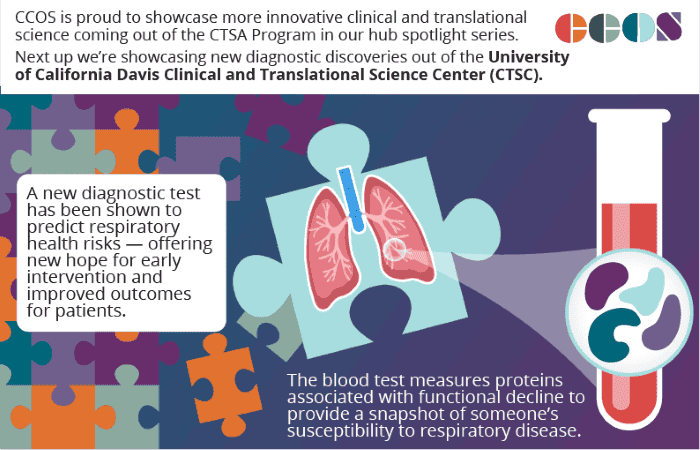
A new method described in the article changes the diagnostic paradigm by using a blood test to measure proteins associated with increased lung function decline. As opposed to tracking the patient’s respiratory decline over a period, this technique provides a snapshot of an individual's susceptibility to respiratory disease at a single point in time. This allows healthcare providers to identify at-risk patients without the need for extensive lung function data and facilitates more timely treatment.
The researchers identified proteins associated with a rapid decline in lung function from the Coronary Artery Risk Development in Young Adults (CARDIA) cohort, a previous study involving lung function measurements over a period of 30 years. By analyzing these proteins, the researchers developed a proteomic respiratory susceptibility score. This score was then validated in two additional cohorts: the U.K. Biobank and the COPDGene study, covering various populations and smoking histories. The study found that a higher score is linked to increased risk of all-cause mortality, respiratory mortality, incident COPD, and respiratory exacerbations. Of note, the score effectively predicts these outcomes across different cohorts, regardless of smoking status.
While the study's findings are promising, further research is needed to translate the proteomic score into clinical practice. Key areas for future exploration include validation in broader populations to confirm the score's effectiveness in different demographic and clinical settings, developing protocols to incorporate the proteomic score into routine healthcare screenings to enhance early detection and management of respiratory diseases, and understanding the biological pathways associated with the proteins in the score to reveal new targets for therapeutic intervention.
The development of a proteomic risk score for respiratory susceptibility marks a significant step forward in treating chronic respiratory diseases like COPD. By enabling early detection and intervention, this approach has the potential to improve outcomes for millions of individuals worldwide. As research continues, the integration of proteomics into clinical practice could revolutionize how we predict, prevent, and treat respiratory conditions, ultimately enhancing the quality of life for those at risk.


