



Beyond the Science: 2026 CCTS Bioethics Forum Highlights Collaborative Research Partnerships
Summary
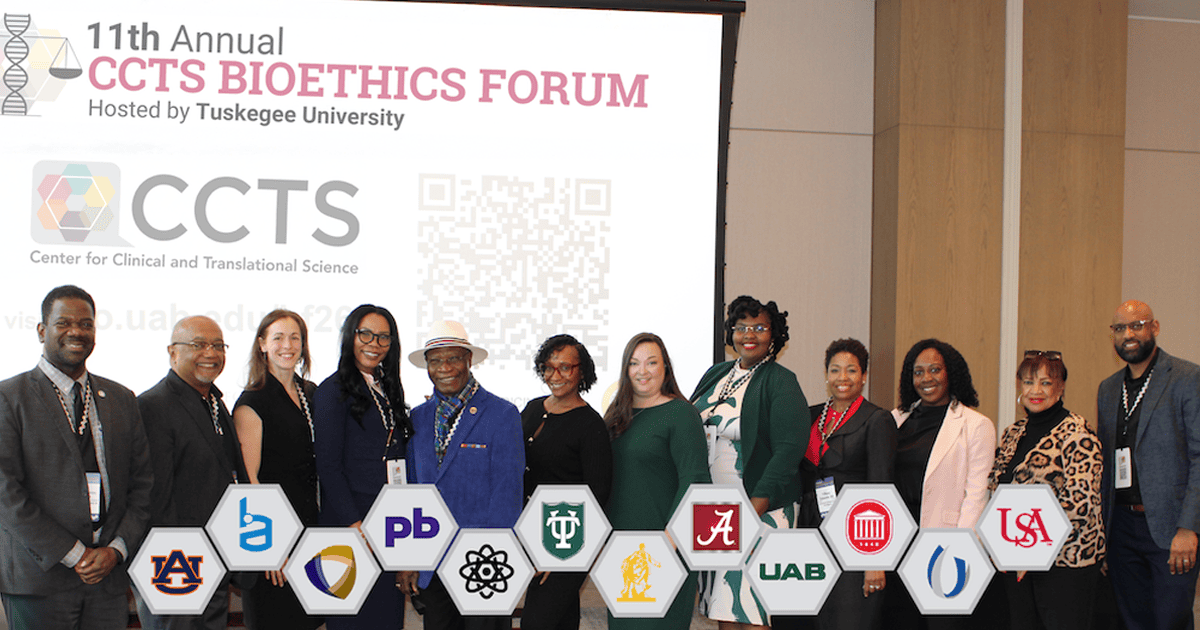
More than 80 researchers, community leaders, and public health professionals gathered in Montgomery, Alabama, on February 26, 2026, for the 11th Annual CCTS Bioethics Forum, hosted by Tuskegee University at the Elevation Convening Center & Hotel.
Article
More than 80 researchers, community leaders, and public health professionals gathered in Montgomery, Alabama, on February 26, 2026, for the 11th Annual CCTS Bioethics Forum, hosted by Tuskegee University at the Elevation Convening Center & Hotel. Centered on the theme “Beyond the Science: Co-Creating Fundable Research with Communities for Lasting Impact,” the forum explored practical strategies for strengthening ethical research partnerships and advancing health outcomes.
The event welcomed attendees from across the Center for Clinical and Translational Science (CCTS) Partner Network and beyond. Throughout the day, participants shared insights, posed questions, and contributed perspectives that helped shape the conversation around how research partnerships can better reflect community priorities while advancing scientific discovery. Guiding the day’s discussions was Carol Agomo, PhD, MPH, MBA, of the University of Alabama at Birmingham (UAB), who served as moderator and helped connect the themes across presentations and interactive sessions.
The forum began with welcoming remarks from Timothy Turner, PhD, Associate Vice President for Research at the Tuskegee University Center for Biomedical Research; Orlando Gutierrez, PhD, Hilda B. Anderson Endowed Chair in Nephrology, Professor of Medicine and Epidemiology, Director of the Center for Clinical and Translational Science (CCTS), and Senior Associate Dean for Clinical and Translational Research at UAB; and Stephen Olufemi Sodeke, PhD; DBE, Resident Bioethicist, Tuskegee University Center for Biomedical Research, Professor of Bioethics and Allied Health Sciences, College of Arts & Sciences. Their remarks welcomed attendees and underscored the importance of collaboration between researchers and communities in advancing impactful health initiatives.
“When communities help shape the research questions from the beginning, the work becomes more relevant, more trusted, and ultimately more impactful.” -Timiya S. Nolan, PhD, APRN-CNP, ANP-BC Associate Director of Community Outreach and Engagement, O’Neal Comprehensive Cancer CenterFollowing the welcomes, the program opened with a keynote presentation from Timiya S. Nolan, PhD, APRN-CNP, ANP-BC, Associate Professor in the Division of General Internal Medicine and Population Science in the UAB Heersink School of Medicine’s Department of Medicine and Associate Director of Community Outreach and Engagement at the O’Neal Comprehensive Cancer Center. Nolan emphasized the importance of building research collaborations grounded in trust, shared goals, and sustained engagement with communities. Her engaging remarks, often interwoven with brief musical references including works by James Weldon Johnson and songs popularized by artists such as Sam Cooke and Aretha Franklin, set the tone for the day’s discussions, highlighting how meaningful partnerships between researchers and community stakeholders can strengthen research proposals, expand funding opportunities, and improve the long-term impact of health initiatives. Nolan’s keynote provided a shared foundation for the sessions that followed, as participants explored practical examples of how collaborative research partnerships are being developed and sustained across different communities and institutions.
The next session highlighted real-world examples of collaborative research during Lightning Case Studies: Real-World Co-Creation, led by Anthony C. Hood, PhD, from UAB. These case studies highlighted how investigators and community partners are working together to shape research questions, develop study designs, and translate findings into practice.
From Inspiration to Action
“Ethical research partnerships are built on trust, transparency, and shared responsibility. Communities must be partners in the work, not simply participants.” -Stephen Olufemi Sodeke, PhD; DBE, Resident Bioethicist, Tuskegee University Center for Biomedical Research; Professor of Bioethics and Allied Health Sciences, College of Arts & SciencesThe conversation continued during the panel session Co-Creation Principles and Power-Sharing, hosted by Mona Fouad, MD, MPH, Senior Associate Dean for Access and Engagement, UAB Heersink School of Medicine. Panelists discussed practical approaches for building balanced partnerships between academic investigators and community collaborators. The session emphasized strategies for ensuring research initiatives reflect community priorities while maintaining strong scientific rigor.
Participants then engaged in the Community Priority Mapping Roundtable, facilitated by Bernice L. Frazier from Tuskegee University and the Macon County Health Authority. During this session, attendees broke into smaller groups to identify shared priorities and opportunities for collaboration. The interactive format encouraged open dialogue between academic investigators and community leaders, reinforcing the importance of mutual understanding when shaping research agendas.
Later in the program, Christian Smith, Director of Development, UAB Advancement, led a session on Strategies for Applying to Foundation and Corporate Funding Opportunities. The discussion provided practical guidance on developing competitive proposals and identifying funding pathways that support collaborative research initiatives.
Interactive collaboration continued during the Community–Academic Pitch Session, led by Kimberly Randall, MA, Director of Strategic Partnerships and External Affairs, at the Center for the Study of Community Health (UAB). During the session, teams presented early-stage ideas for collaborative projects and received feedback from peers and facilitators. The exercise highlighted how early engagement between community partners and researchers can strengthen research concepts and improve the likelihood of funding success.
Stay Engaged!
Download the Ethical Co-Creation Toolkit
Subscribe to the weekly CCTS Digest
The forum concluded with the Ethics and Fairness Clinic, led by Dr. Sodoke, who encouraged participants to consider how ethical frameworks can guide collaborative research and sustain partnerships built on transparency, respect, and shared accountability. As the event concluded, attendees reflected on the value of bringing diverse perspectives together to address complex health challenges. The discussions, questions, and contributions from participants throughout the day played an essential role in shaping the forum’s collaborative atmosphere. Now in its eleventh year, the CCTS Bioethics Forum continues to provide a trusted platform for exploring ethical issues in clinical and translational research while strengthening connections among researchers, community partners, and institutions across the CCTS Partner Network.
Moving Forward: The Ongoing Conversation on Co-Creating Fundable Research
The 2026 Bioethics Forum also marked the launch of the "Ethical Co-Creation Toolkit," a new resource designed to support researchers and community partners in developing collaborative research proposals grounded in trust, shared priorities, and ethical engagement. The toolkit provides practical guidance, examples, and tools to help teams strengthen partnerships and develop competitive proposals.
Later this summer, the CCTS will also launch the Community Science Commons, an online hub that will bring together resources for both community partners and researchers interested in collaborative science. The Commons will serve as a central space for learning, connecting, and accessing tools that support community-engaged research across the CCTS Partner Network.
https://www.uab.edu/ccts/news-events/center-news/2026-ccts-bioethics-forum-recap


