U.S Department of Health & Human ServicesHHSNational Institutes of HealthNIHNCATSNCATSCTSA ProgramCTSA
CTSA CCOS

Coordination, Communication, and Operations Support

RegisterLog In
CTSA Groups and Meetings
Need Help
Log in to view meeting materials such as meeting slides and recordings

2025 Fall CTSA Program Annual Meeting
CTSA Banner Image

2025 Fall CTSA Program 

Annual Meeting
Submitted Poster

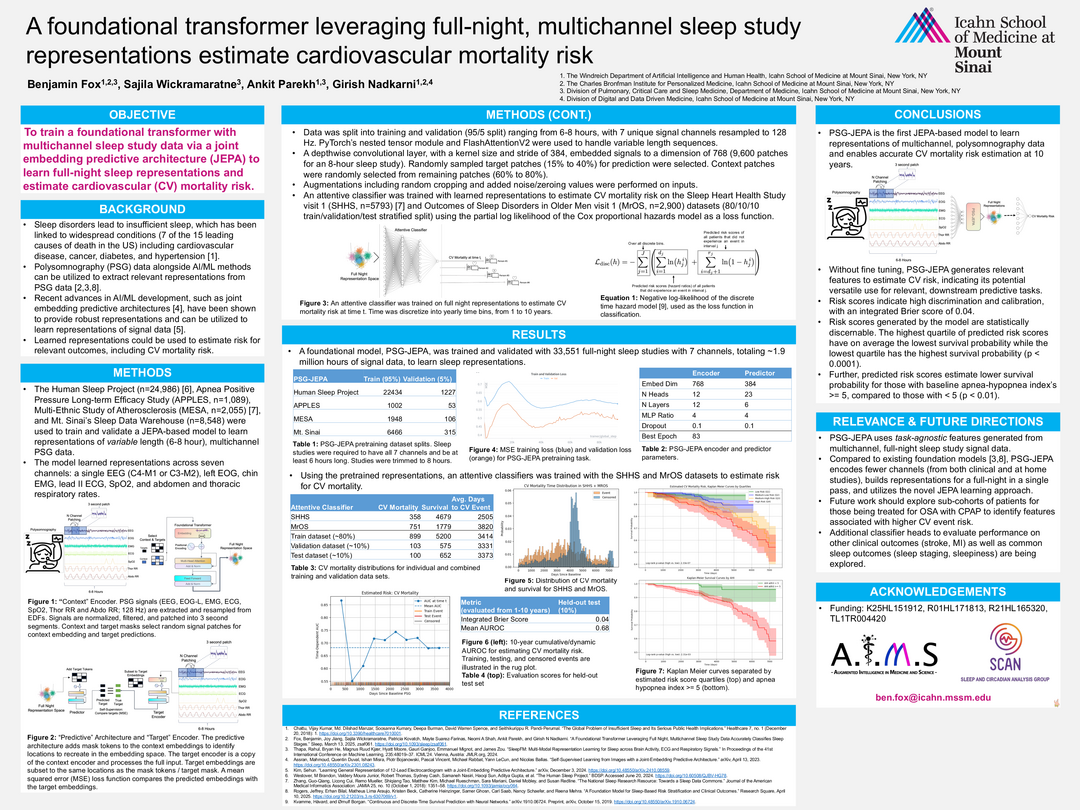
A foundational transformer leveraging full-night, multichannel sleep study representations estimate cardiovascular mortality risk

Benjamin Fox

Hub not available
Title: A Foundational Transformer Leveraging Full-Night, Multichannel Sleep Study Representations to Estimate Cardiovascular Mortality Risk Authors: Benjamin Fox, Sajila Wickramaratne, Ankit Parekh, Girish Nadkarni Affiliations: Icahn School of Medicine at Mount Sinai Objective: This study introduces PSG-JEPA, a foundational transformer model trained on multichannel, full-night polysomnography (PSG) data using a Joint Embedding Predictive Architecture (JEPA). The model aims to learn robust, task-agnostic sleep representations to estimate 10-year cardiovascular (CV) mortality risk. Background: Sleep disorders are linked to several leading causes of death, including cardiovascular disease. PSG data, when combined with advanced AI/ML techniques, can yield meaningful representations for clinical risk prediction. JEPA, a recent self-supervised learning approach, offers a promising framework for learning from complex signal data. Methods: The model was trained on 33,551 PSG studies (~1.9 million hours) from four large datasets: the Human Sleep Project, APPLES, MESA, and Mt. Sinai’s Sleep Data Warehouse. Each study included seven signal channels (EEG, EOG, EMG, ECG, SpO₂, thoracic and abdominal respiratory rates), resampled to 128 Hz and segmented into 3-second patches. A depthwise convolutional encoder embedded these into a 768-dimensional space. JEPA was used to predict masked target patches from context patches using a mean squared error loss. An attentive classifier was trained on the learned representations using the SHHS and MrOS datasets (n=8,693) to estimate CV mortality risk, with time discretized into yearly bins over a 10-year horizon. The Cox proportional hazards model was used as the loss function. Results: PSG-JEPA achieved a mean AUROC of 0.68 and an integrated Brier score of 0.04 on the held-out test set. Risk scores showed strong calibration and discrimination. Kaplan-Meier curves demonstrated statistically significant survival differences across risk quartiles (p < 0.0001). Individuals with an apnea-hypopnea index (AHI) ≥ 5 had significantly lower survival probabilities than those with AHI < 5 (p < 0.01). The model generalized well without fine-tuning, indicating its potential for broader clinical applications. Conclusions: PSG-JEPA is the first JEPA-based model to learn full-night, multichannel PSG representations for CV mortality risk prediction. Its ability to generate meaningful, task-agnostic features without fine-tuning highlights its utility for downstream clinical tasks. Future directions include evaluating performance on other outcomes (e.g., stroke, MI, sleep staging) and exploring sub-cohorts such as CPAP-treated patients. Funding: K25HL151912, R01HL171813, R21HL165320, TL1TR004420
Submitted Poster

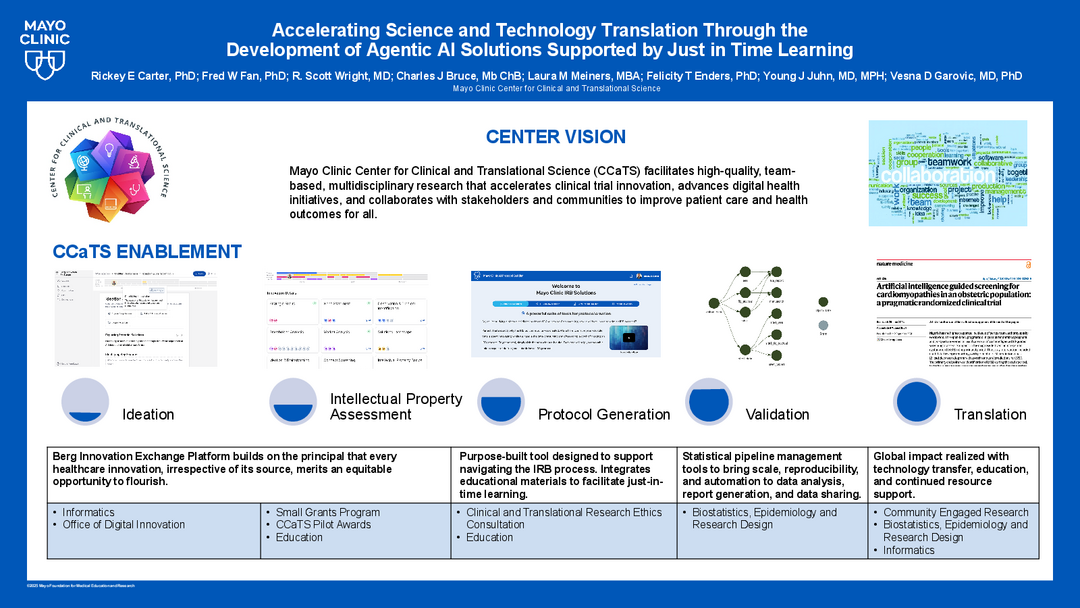
Accelerating Science and Technology Translation Through the Development of Agentic AI Solutions Supported by Just in Time Learning

Rickey Carter

Hub not available

Mayo Clinic Center for Clinical and Translational Science (CCaTS) facilitates high-quality, team-based, multidisciplinary research that accelerates clinical trial innovation, advances digital health initiatives, and collaborates with stakeholders and communities to improve patient care and health outcomes for all.
Submitted Poster

Adapting and Disseminating the Blue Star Investigator Training Program: Variations on a Theme

Kris Markman

Hub not available
Tufts Clinical and Translational Science Institute launched the Blue Star Investigator Certificate Program in 2021, an education innovation designed to address a gap in hands-on training in the operational skills of developing and running investigator-initiated clinical trials. The first iteration of the program was designed as an 8-week blended learning experience, combining self-paced online didactic content with weekly 2-hour live sessions where participants engaged in active learning to apply concepts to real-world scenarios. After a successful initial cohort, [1] the program was expanded from 8 to 10 weeks in 2022 and 2023 to incorporate more opportunities for learners to develop their own clinical trial ideas in consultation with project mentors. Across all three cohorts, program participants consistently reported that the live in-person sessions were one of the most valuable aspects of the program. These sessions, however, are also resource- and labor-intensive and do not scale well. The challenge, then, was to develop a strategy to disseminate this training innovation to other audiences to expand reach and impact. In collaboration with our partners at MaineHealth Institute for Research and the Northern New England Clinical and Translational Research Network (NNE-CTR) we developed a new variation of the program, Blue Star – Maine and an accompanying train-the-trainer model to adapt and scale the core curriculum to new audiences. In response to local needs, we adapted this program to focus on serving as a site Principal Investigator (PI) for industry clinical trials and shortened the in-person sessions to 1 ½ days. In 2025 we developed and offered a third variation of the core Blue Star curriculum, this time tailored to the needs of lay leaders in patient advocacy groups – an underserved audience with an identified need for education in clinical trial operations. This poster illustrates how Tufts CTSI is adapting the Blue Star program to meet the needs of different learner groups and scaling our training innovation to other sites while retaining the key components that contribute to high-impact learning. 1. Markman KM, Brewer SK, Klein AK, Magnuson B. Developing an engaging and accessible clinical research training program for new investigators. Journal of Clinical and Translational Science. 2023;7(1):e53. doi:10.1017/cts.2022.446
Submitted Poster

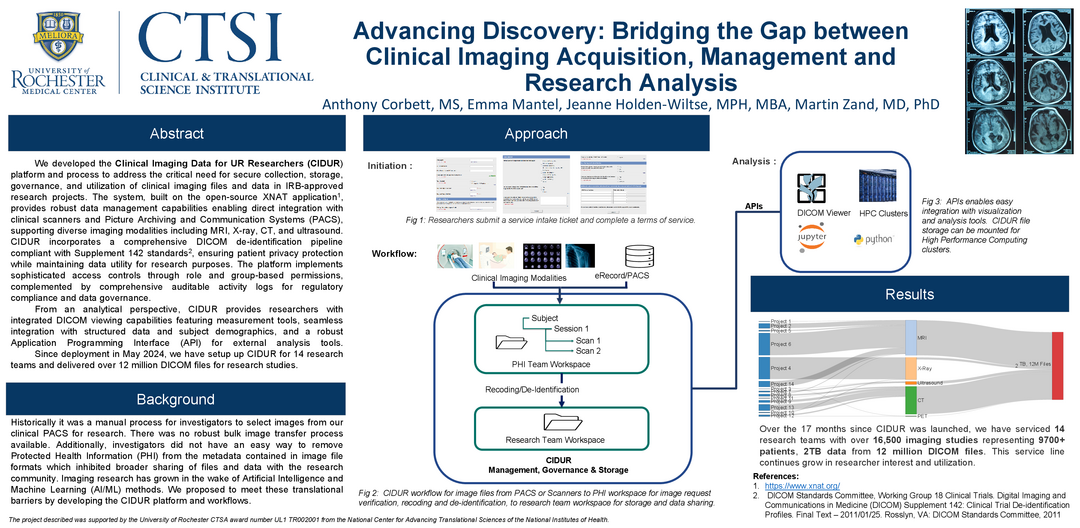
Advancing Discovery: Bridging the Gap between Clinical Imaging Acquisition, Management, and Research Analysis

Jeanne Holden-Wiltse

Hub not available

We developed the Clinical Imaging Data for UR Researchers (CIDUR) platform and process to address the critical need for secure collection, storage, governance, and utilization of clinical imaging files and data in IRB-approved research projects. The system, built on the open-source XNAT application1, provides robust data management capabilities enabling direct integration with clinical scanners and Picture Archiving and Communication Systems (PACS), supporting diverse imaging modalities including MRI, X-ray, CT, and ultrasound. CIDUR incorporates a comprehensive DICOM de-identification pipeline compliant with Supplement 142 standards2, ensuring patient privacy protection while maintaining data utility for research purposes. The platform implements sophisticated access controls through role and group-based permissions, complemented by comprehensive auditable activity logs for regulatory compliance and data governance. From an analytical perspective, CIDUR provides researchers with integrated DICOM viewing capabilities featuring measurement tools, seamless integration with structured data and subject demographics, and a robust Application Programming Interface (API) for external analysis tools. Since deployment in May 2024, we have setup up CIDUR for 14 research teams and delivered over 12 million DICOM files for research studies.
Submitted Poster

Advancing the Translational Science Workforce: An Integrated Model of Research, Education, Mentorship, and Community Engagement

Maija Williams

Hub not available
To advance the translational science workforce through an inclusive, scalable model that integrates education, mentor development, experiential opportunities, peer education, didactic learning, and community engagement. Our approach spans the KL2 and Translational Research Certificate Programs, the Rigor, Reproducibility, and Reporting (“R3”) curriculum, epidemiology and “big data”, weekly research seminars, mentor training, clinical and nursing externships, community-based clinicians, health centers and community advisory board initiatives. Collectively, this model builds skills, strengthens mentorship, expands career pathways, and deepens public trust while demonstrating cross-hub relevance and alignment with CTSA goals.
Submitted Poster

An iterative approach to evaluating impact of a CTSA program using the Translational Science Benefits Model

Borsika Rabin

Hub not available
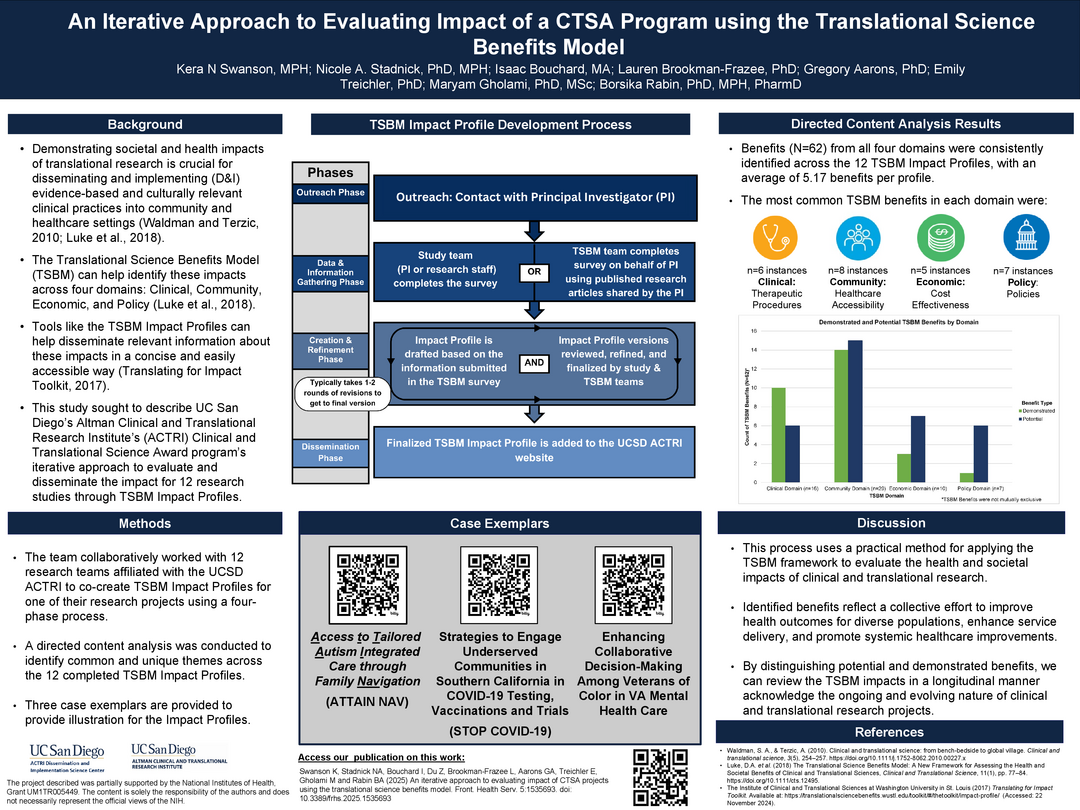
Background: Clinical and translational science streamlines the translation of research evidence into real-world practice, benefiting broader communities. Demonstrating the relevance and impact of this work across diverse settings is crucial for disseminating and implementing (D&I) high-quality and culturally relevant clinical practices. The Translational Science Benefits Model (TSBM) helps assess clinical and community health impacts of translational research outcomes beyond traditional measures. The University of California San Diego’s Altman Clinical and Translational Research Institute (UCSD ACTRI) adopted the TSBM to evaluate the impact of their supported research projects. This study describes an iterative approach to develop TSBM Impact Profiles and identify themes related to TSBM domains and key benefits. Methods: UCSD ACTRI investigators completed an online form adapted from the TSBM Toolkit, detailing the project challenge, approach, intended impact, and relevant TSBM domains and benefits. The ACTRI TSBM team synthesized this information and aligned it with the TSBM framework. Finalized content was transformed into 1-3 page TSBM Impact Profiles published on the ACTRI website. A directed content analysis examined themes related to TSBM domains and benefits across the profiles. Results: Results from three published D&I-specific Impact Profiles indicate TSBM benefits covered all four TSBM domains (Community, Clinical, Policy, and Economic), with a notable focus on community, clinical, and policy-related benefits. Each profile contained unique benefits (M=5) across these domains, including both potential (M=2) and demonstrated benefits (M=3). The ATTAIN NAV project highlighted Community, Clinical, and Policy benefits by improving engagement with health services and influencing healthcare policies. The STOP COVID-19 project addressed all four domains, enhancing healthcare practices for underserved communities. The Enhancing Collaborative Decision-Making project focused on Clinical, Community, and Policy benefits by engaging veterans of color to improve mental health care quality and utilization. Discussion: This work provides practical methods and example case studies for applying the TSBM framework to evaluate the relevance and impact of research projects. Results highlight an effective process for capturing a multitude of impacts across diverse projects, reflecting core D&I objectives by assessing evidence-based interventions that address public health and healthcare disparities. Additional impact profile data will be presented to further demonstrate the applicability of this method.
Submitted Poster

ARLife: Building a Cross-Institutional, Cross-Sector, Real-World Data Platform for Lifespan Research in Arkansas

Joe Thompson

Hub not available
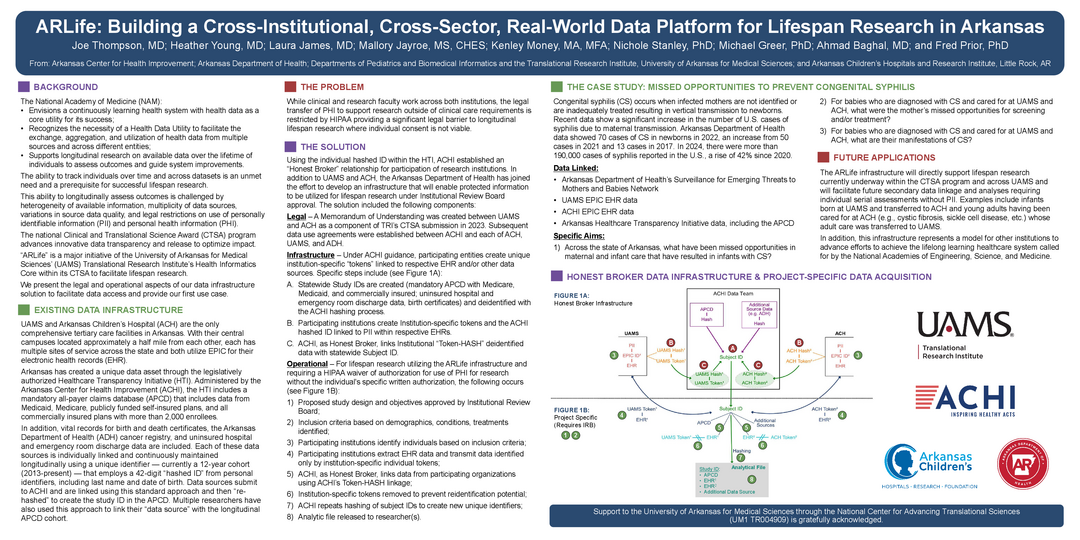
TITLE: ARLife: Building a Cross-Institutional, Cross-Sector, Real-World Data Platform for Lifespan Research in Arkansas BACKGROUND: The National Academy of Medicine envisions a continuously learning health system with data as a core utility for success. Clinical and Translational Science Award (CTSA) programs have leveraged electronic health care data for COVID-19 research at the national level. However, individual state-based approaches for clinical research using electronic health records data, as well as data from public health departments and health insurance claims has received less attention. Barriers to compiling data from multiple health-related entities include entity-specific missions and regulations, data privacy and security, variations in data quality, and logistical challenges associated with patient name changes over time. The Translational Research Institute (TRI) at the University of Arkansas for Medical Sciences (UAMS) developed ARLife to overcome data linkage challenges and to support research initiatives in lifespan research. We present the legal and operational aspects of ARLife, TRI’s initiative to overcome these barriers in support of lifespan research. AIMS/PUPOSE: To enable linked longitudinal data from multiple institutions without individually informed consent to be utilized by researchers for lifespan research. METHODS: TRI leveraged existing relationships with representatives from two hospitals, the Arkansas Department of Health, and an independent health policy center to build a viable mechanism to create analytic files for lifespan research. We describe the institutional agreements, “honest broker” data infrastructure, and project-specific processes for data acquisition. RESULTS: The method of combining existing data including a mandatory all-payer claims database, state health department data, EPIC electronic health record data from the two tertiary care centers serving Arkansas adults and children, UAMS and Arkansas Children’s Hospital, respectively, is demonstrated. A case study of initial application for congenital syphilis is provided. CONCLUSION: TRI’s ARLife infrastructure directly supports lifespan research currently underway and represents a model for other institutions to advance efforts to establish longitudinal studies.
Submitted Poster

Artificial Intelligence in Last Mile Translation: Catalyzing Learning

Vladimir Manual

Hub not available
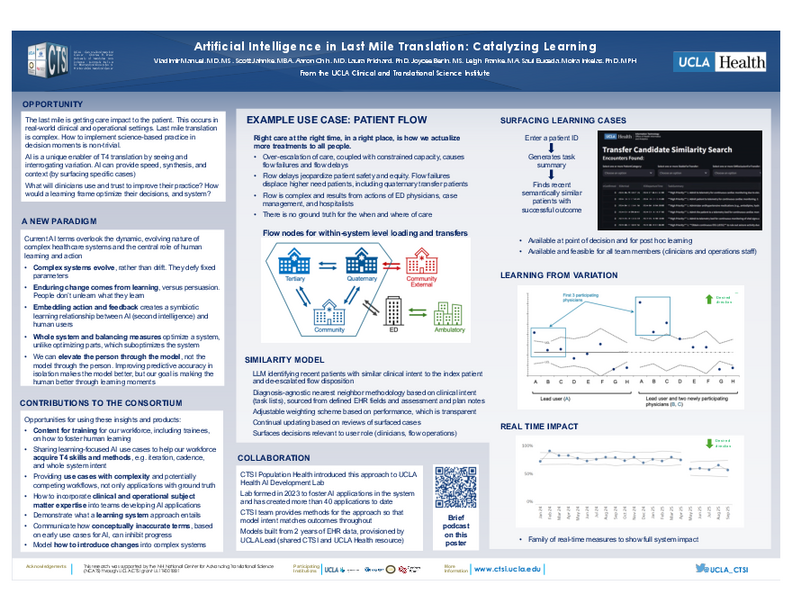
Advancing a New Paradigm for T4 AI Application Background: Many AI applications in healthcare optimize narrow functions rather than whole systems. These products can be taxing to physicians and address a symptom rather than a cause of health system pain points. Also, translational researchers often seek to persuade clinicians to trust AI predictions rather than use AI to enhance human performance, which is true clinical decision support and a unique contribution of AI. The CTSI hub collaborated with the UCLA Health AI Development Lab to address these issues Methods/Innovation: The Lab leverages UCLA Health analytics and operations, and multiple hub programs, to form teams of clinical informaticists, computer scientists, translational researchers, and health system operational leads who scope the problem and iterate toward a durable solution. The teams seek system-level problem solving—creating conditions for durable change. Most recently, the Lab is advancing a new paradigm for T4 applications of AI by: (1) orienting teams on optimizing a system rather than its isolated parts, (2) focusing on making humans better through learning, rather than making models better; (3) embedding iterative improvement frameworks into AI projects; and (4) incorporating feedback loops that reflect the variation and evolution of healthcare systems, i.e. the lack of ground truth in problems such as providing the right care in the right place. This has produced an interactive platform that applies nearest-neighbor methods to surface clinically relevant cases for physicians. This accelerates their learning and improves future decision-making about patient placement and treatment. Impact: The CTSI collaboration with the AI Development Lab is a translational science innovation that enables more durable translation of knowledge into practice. The new paradigm fosters a new culture of AI for translation: clinicians, informaticists, and translational researchers work side by side, using shared language and continuous feedback to accelerate knowledge into practice. It is highly adaptable for dissemination across the national CTSA consortium, with an open and modular informatics platform integrable into many electronic health record environments; scalable statistical and data-driven methods (e.g., nearest-neighbor case surfacing) that can be applied within and across clinical domains; a shared evaluation and feedback framework that supports the real-time needs of delivery systems; and a collaborative action model that fosters a shared learning culture of frontline clinicians, operations, health system informatics, and scientists. The collaboration is a practical, reproducible blueprint for other CTSA hubs seeking to expand translational science capacity through AI-driven, data-enabled infrastructure.
Submitted Poster

Building a CTSA-powered, modern analytic ecosystem: SHIRE and ORDR(D)

Emily Pfaff

Hub not available
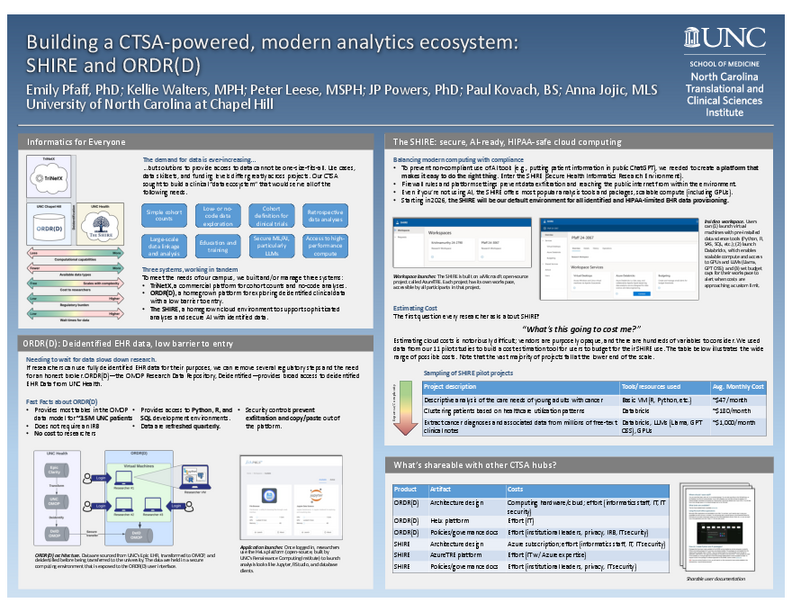
The Informatics and Data Science core at NC TraCS provisions electronic health record data for 250-300 research studies each year. These datasets range from simple Excel spreadsheets; to millions of records across tens of tables, extracted as individual CSVs; to sizeable JSON files containing thousands or more free-text clinical notes. While this provisioning process has served thousands of studies, it has fallen behind in meeting the needs of modern data science in a number of ways: (1) performance, for analyses that require significant compute; (2) auditing, to ensure users are adhering to our policies; (3) security, to programmatically restrict users from moving or exfiltrating data; and (4) file formatting, to provide very large files in optimal formats (e.g., Parquet) rather than unwieldy CSVs. To address these shortcomings, UNC School of Medicine and UNC Health have developed a new analytical ecosystem, including the following systems: • TriNetX, a commercial platform for cohort counts and no-code analyses. • ORDR(D), a homegrown platform for exploring deidentified clinical data with a low barrier to entry. • The SHIRE, a homegrown cloud environment to support sophisticated analyses and secure AI with identified data. Here, we describe ORDR(D) and SHIRE, particularly focusing on the components of those systems that are shareable with other CTSA hubs.
Submitted Poster

Building a Digital Twin Model for Predicting Maternal Health Risks: Utilizing Multi-Institutional Collaborations to Advance Innovative Clinical and Translational Science

Alexander Libin

Hub not available

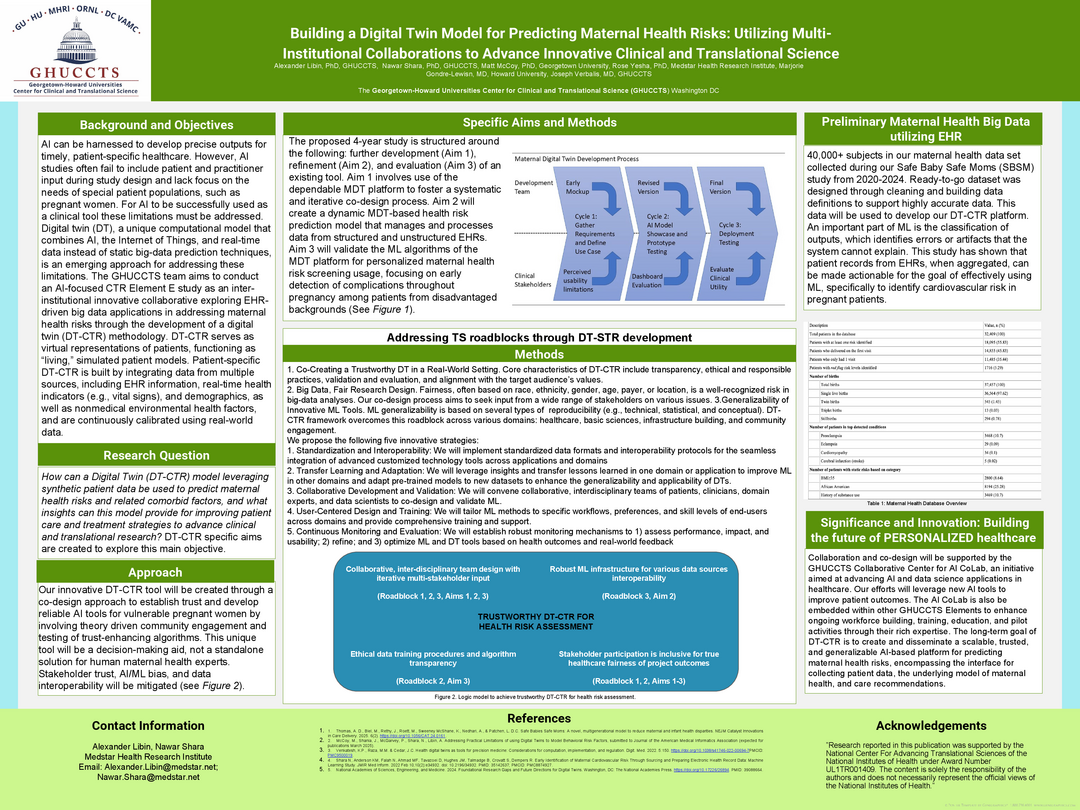
Artificial Intelligence (AI) holds significant promise for developing personalized predictions patient-specific healthcare. However, AI studies often fail to integrate the needs of special patient populations, including pregnant women. Digital twin (DT) technology represents an emerging approach for addressing these limitations while optimizing healthcare decisions. The GHUCCTS team aims to conduct an AI-focused Clinical and Translational Research (CTR)Element E study as an inter-institutional innovative collaborative exploring EHR-driven big data applications in addressing maternal health risks through the development of a digital twin (DT-CTR) methodology. DT-CTR serves as virtual representations of patients, functioning as “living,” simulated patient models. Patient-specific DT-CTR is built by integrating data from multiple sources, including EHR information, real-time health indicators (e.g., vital signs), and demographics, as well as nonmedical environmental health factors, which are continuously calibrated using real-world data. Research Question and related Specific Aims: How can a Digital Twin (DT-CTR) model leverage synthetic patient data for predicting maternal health risks and related comorbid factors? DR-CRT specific aims are structured around a proposed 4-year study which emphasizes Aim 1 (further development), Aim 2 (refinement), and Aim 3 (evaluation of an existing tool). Aim 1 will optimize the Maternal Digital Twin (MDT) platform via a iterative process that includes diverse stakeholders. Aim 2 will create adynamic MDT-based health risk prediction model that utilizes data from structured and unstructured EHRs. Aim 3 will validate the machine learning (ML) algorithms of the platform for personalized maternal health risk screening, enabling early detection of complications among patients from disadvantaged backgrounds (see Figure 1). Preliminary Big Data Study Results: Data from 40,000+ individuals were collected during our preliminary Safe Baby Safe Moms (SBSM) study from 202-2024. A Ready-to-go dataset was designed through streamlining data definitions to support the pre and postnatal journey. Methods and Analysis: The project will develop trustworthy AI tools for vulnerable pregnant women by implementing community engagement with trust-enhancing algorithms. We plan to mitigate major roadblocks that could hinder MDT implementation (see Figure 2). Significance and Innovation: The co-design activities will be supported by the GHUCCTS Collaborative Center for AI CoLab. The AI CoLab is also be embedded within other GHUCCTS Elements to enhance ongoing workforce building, training, education, and pilot activities through their rich expertise. The long-term goal of DT-CTR is to create and disseminate a scalable, trusted, and generalizable AI-based platform for predicting maternal health risks. This will facilitate an interface for collecting patient data a core model of maternal health and care recommendations.

Coordination, Communication, and Operations Support (CCOS) is funded by theNational Center for Advancing Translational Sciences, National Institutes of Health.

HomeContact UsPrivacy PolicyAccessibility Statement
Freedom of Information (FOIA)Office of Inspector General (OIG)Cookie Preference
X-TwitterLinkedIn icon