

Impact Story • Success Story
Leveraging Electronic Health Records to Advance Predictive Modeling and to Identify Risks in Disease Outcomes
By Tejaswini Manjunath(1), et al.
All Authors and Affiliations
Affiliations:
1. Digital Infuzion
Posted April 24, 2026
Featured CTSA Institutions:
Icahn School of Medicine at Mount Sinai
UT Southwestern Medical Center
University of North Texas Health Science Center
Northwestern University at Chicago
University of Minnesota
University of Wisconsin Madison
Abstract
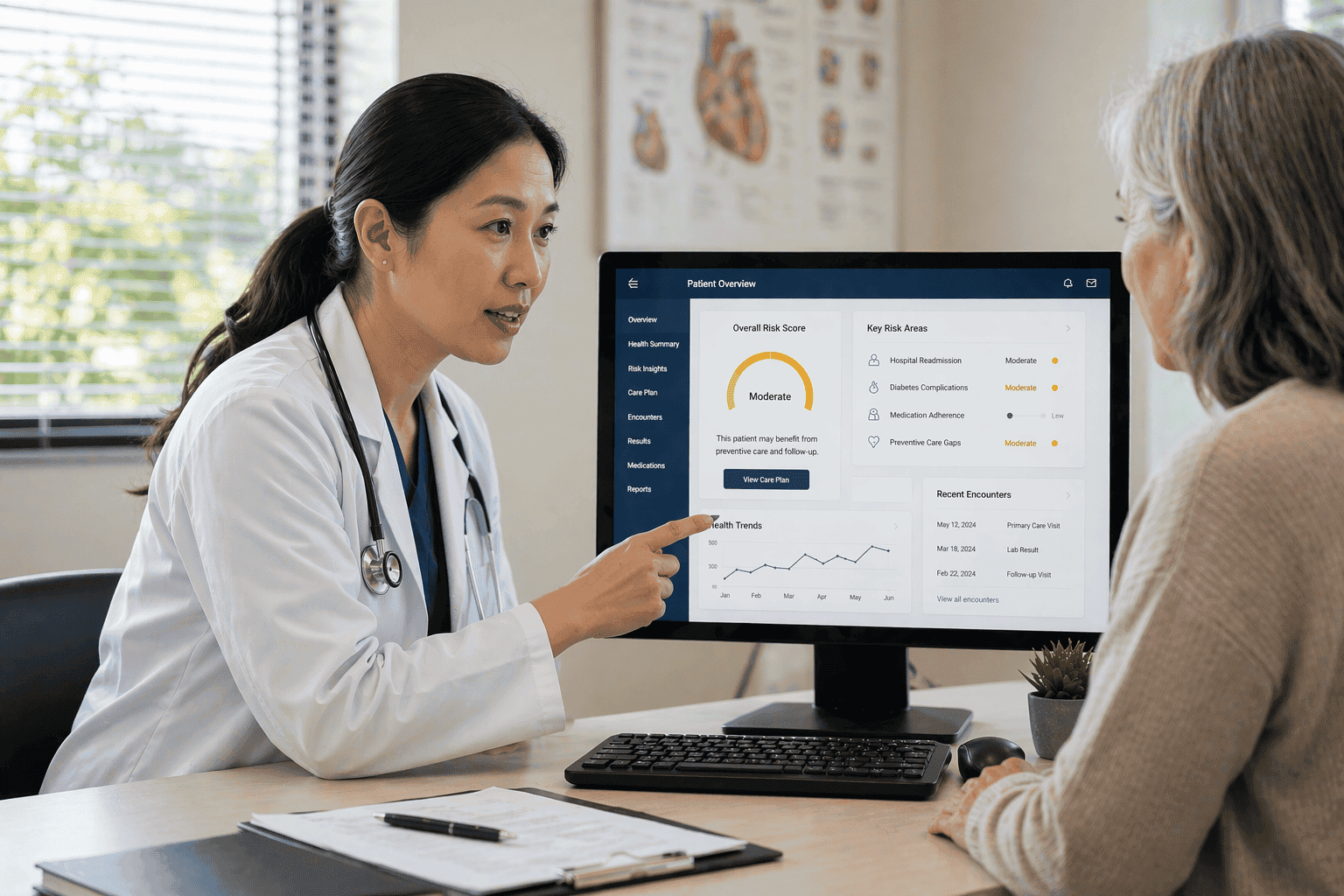
The widespread adoption of electronic health records (EHRs) has created new opportunities to use real-world patient records to predict disease courses, identify high-risk patients, and improve healthcare outcomes. However, transforming large and complex health datasets into reliable predictive tools requires new analytic methods, data infrastructure, and validation across healthcare systems. Researchers supported by the Clinical and Translational Science Awards (CTSA) program have made steady advances over time that have helped translate EHR data into tools that physicians can use for patient treatment decisions and health management. We feature 6 examples that demonstrate CTSA contributions to enhancing predictive modeling and risk identification to improve patient outcomes.
1
34
50
Impact Story
The widespread adoption of electronic health records (EHRs) has created new opportunities to personalize medical treatment by using real-world patient records to predict disease courses, identify high-risk patients, and adapt clinical care to improve healthcare outcomes. However, transforming large and complex health datasets into reliable predictive tools involves many challenges, including new analytic methods, data infrastructure, and validation across healthcare systems. Researchers supported by the Clinical and Translational Science Awards (CTSA) program have contributed to important advances that have helped to translate EHR data into tools that physicians can use for patient treatment decisions and health management.
We feature six examples that demonstrate a few of CTSA's contributions to predictive modeling that have enabled adjusting patient treatments based on risk identification. These examples show a strong track record for the program over time in leveraging electronic health records for improved approaches that have resulted in new medical policies.
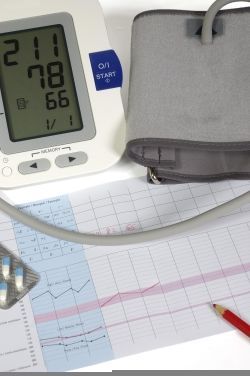
Early CTSA-supported research demonstrated how electronic medical records could be used to predict patient outcomes. A study developed an automated model to identify heart failure patients at risk for hospital readmission or death (Amarasingham et al., 2010). This showed that clinical and social factors captured within electronic records accurately predicted adverse outcomes and created a strong foundation by illustrating how routinely collected clinical data can support risk stratification and inform care management strategies. This work has been cited in 15 healthcare policies and six patents.
As EHR datasets have grown larger, CTSA investigators have applied advanced analytics and machine learning to uncover patterns in patient data. The Deep Patient study (Miotto et al., 2016) introduced a deep learning framework that analyzed records from more than 700,000 patients to identify patterns predictive of future disease across dozens of conditions. This approach significantly improved prediction accuracy compared with traditional methods and has been cited in 17 policy documents, 44 patents, a clinical trial, and 1623 publications, reflecting its influence on the development of data-driven clinical decision support systems.
CTSA-supported researchers also helped build the infrastructure needed to integrate EHR data with biomedical research. The Electronic Medical Records and Genomics (eMERGE) consortium (Kho et al., 2011), cited in one policy document, demonstrated how clinical data from multiple health systems could be used to reliably identify disease phenotypes for genomic studies. By linking electronic health records with genetic research, this work helped advance precision medicine and expanded the use of real-world clinical data for large-scale biomedical discovery.
More recent work shows how EHR-based predictive models are validated and applied across healthcare settings. A multi-institutional study evaluating suicide risk prediction models (Barak-Corren et al., 2020), cited in one policy, analyzed data from more than 3.7 million patients across five health systems and demonstrated that these models can identify individuals at elevated risk years before an event occurs, supporting earlier intervention. Similarly, a 2025 study (van Kaick et al., 2025) developed and validated an EHR-based risk tool for hypoglycemia in patients with type 2 diabetes, illustrating how machine learning models can be translated into clinical decision support tools that help identify high-risk patients and guide care. Beyond individual prediction, EHR data also supports population health efforts. For example, a study tracking childhood obesity (Flood et al., 2015), showed how health records can be used for community-level surveillance and to identify disparities, enabling more targeted prevention strategies.
Together, these CTSA-supported studies demonstrate how electronic health records can be transformed from routine clinical documentation into powerful tools for predictive modeling, disease risk identification, and population health monitoring. By advancing analytic methods, data integration strategies, and clinical applications of EHR data, CTSA-supported investigators are helping create learning health systems that use real-world data to improve healthcare decisions and patient outcomes.


